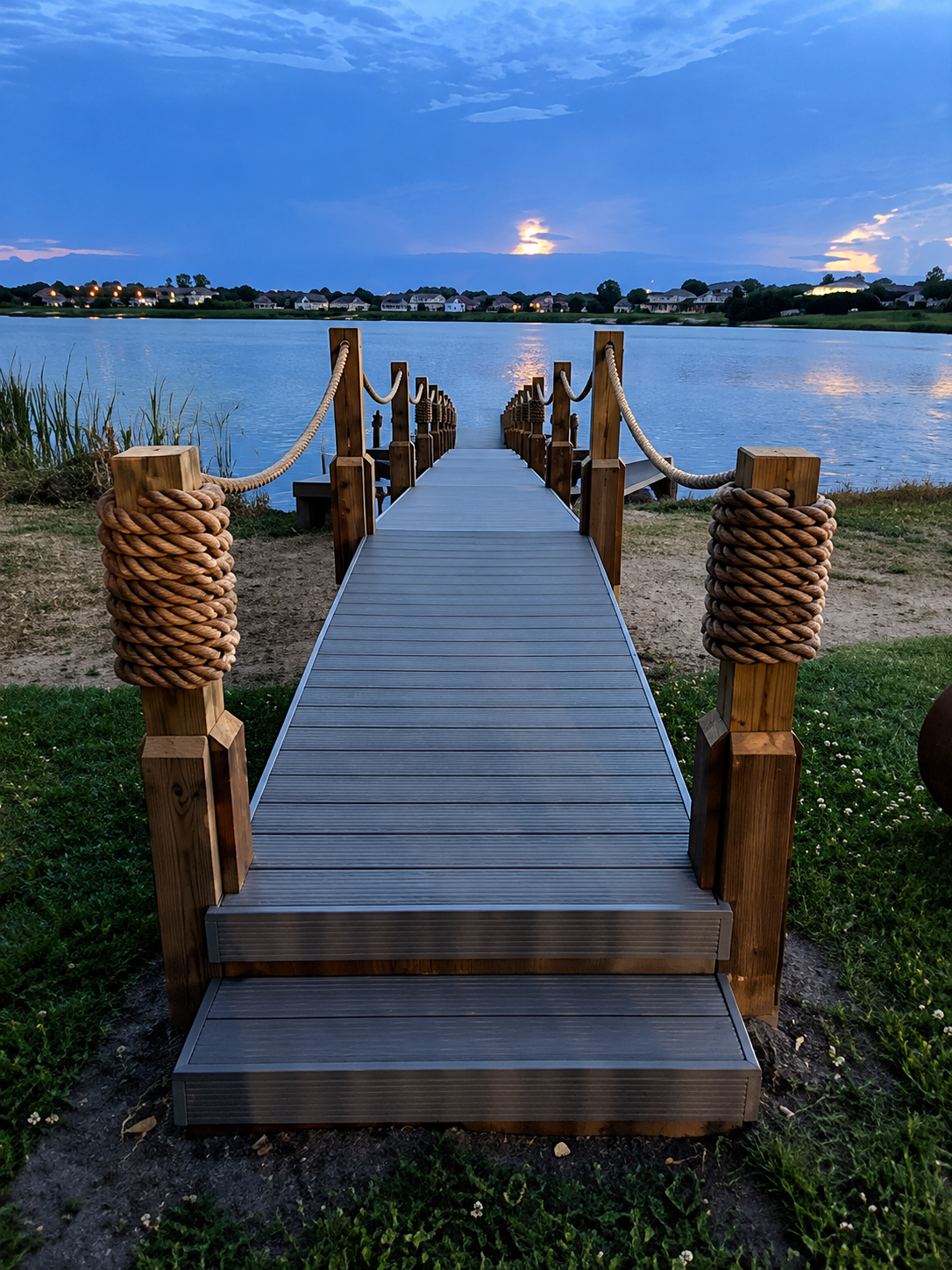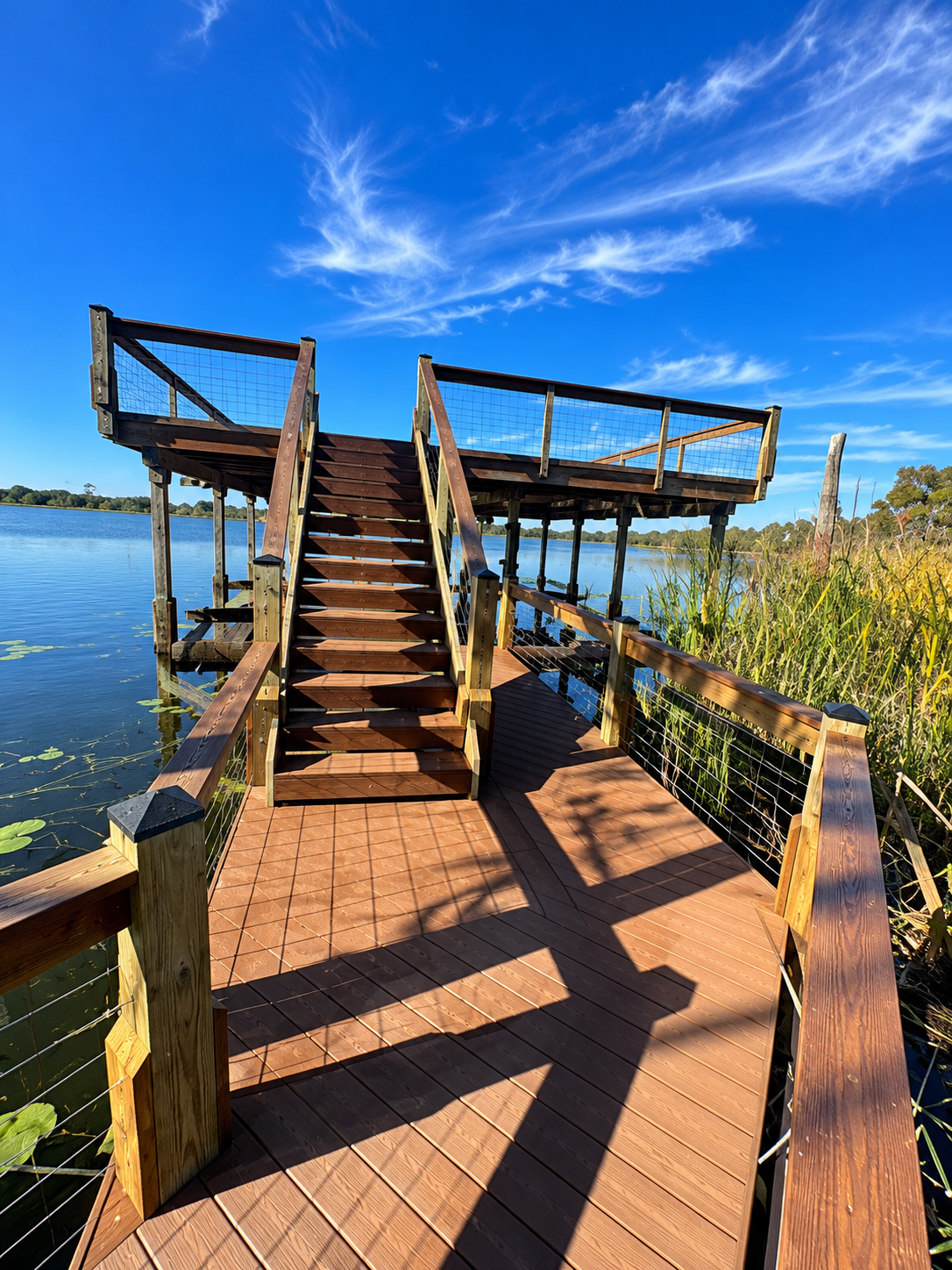
Lighting is the accessory that extends the dock from a daytime structure into an evening one, and in Florida, where the best time on the water is often after the sun goes down, that extension is the one that most changes how the dock is used. A dock with no lighting is a dock that is hard to use after dark, and a dock with the right lighting is a dock that is safe, usable, and inviting at night. The lighting is the addition that turns a platform into a place to spend the evening.
The pathway lighting is the safety baseline, and it is the lighting that makes the dock navigable after dark. Lights that mark the edge of the walkway, the steps, and the boarding area let you see where you are walking without flooding the area with light. A dock without pathway lighting is a trip hazard after sunset, and pathway lighting is the minimum that makes the dock safe to use at night. The lights can be low-level, mounted on the posts or the railings, and they can be solar or wired, depending on the dock's power and the desired brightness.
The overhead lighting is the other kind, and it is the one that serves the seating and the entertaining use. A covered section or a seating area with overhead light extends the usable evening, and it makes the dock a place to gather after dark. Overhead lighting is usually a wired installation, which means it is planned with the dock's electrical and the local requirements in mind. The overhead is the lighting that changes the dock from a place to walk to a place to sit.
The underwater lighting is the specialty choice, and it is the one that changes the water around the dock. Lights that shine into the water attract fish, which makes the dock a place to fish at night, and they also make the water safer by showing what is below the surface. Underwater lighting is a wired installation and one that should be done by a professional, because the water and the electricity are a combination that demands respect. The underwater is the lighting that most changes the experience of the dock at night.
The solar lighting is the option that avoids wiring, and it is the one that suits a dock without power or a dock where the wiring is not practical. Solar lights charge during the day and come on at dusk, and they require no electrical work. The tradeoff is brightness and reliability, because solar lights are dimmer than wired and they depend on the sun, which means they are less reliable on cloudy days or in the winter. Solar is the choice for a dock that needs light without the cost of wiring.
The wired lighting is the option that offers the most control and the most brightness, and it is the one that suits a dock that is used hard and that has power. Wired lighting can be switched, dimmed, and controlled, and it can power brighter fixtures than solar. The tradeoff is the installation, which requires running power to the dock and meeting the local electrical requirements. Wired is the choice for a dock that needs dependable, bright light.
The fixture choice is the other decision, and it is the one that affects the look and the maintenance. A fixture that is exposed to the weather needs to be rated for the wet environment, and the fixture has to handle the corrosion and the UV that Florida brings. A fixture that is well-chosen lasts longer and works better than one that is not, and the fixture is the part of the lighting that the maintenance of the system depends on.
The lighting is also the accessory that most needs the planning, because it is the one that involves the electrical and the code. A dock that is wired for lighting has to meet the local requirements for the wet environment, and the wiring has to be done by someone who knows the code. The lighting is the addition that most benefits from a builder who knows the waterway and the requirements, and it is the one that should be planned with the dock, not added as an afterthought.
The way to add lighting is to start with the use and the dock, and to match the lighting to both. A dock used for boarding wants pathway lighting for safety. A dock used for sitting wants overhead lighting for the evening. A dock used for fishing wants underwater lighting for the attraction. A dock without power wants solar, and a dock with power can handle wired. The lighting is the accessory that most changes the dock's hours, and it is the one that the safety and the use of the dock depend on.
Ready to talk about your waterfront? We assess your shoreline, your watercraft, and how you use the water, then give you an honest, accurate estimate — no obligation.
Frequently Asked Questions
- What kind of lighting does a dock need?
- At minimum, a dock needs pathway lighting that marks the walkway, steps, and boarding area for safety after dark. Overhead lighting serves a seating or entertaining area, and underwater lighting attracts fish and shows what is below the surface. The right lighting depends on how you use the dock.
- Should I use solar or wired dock lighting?
- Solar avoids wiring and suits a dock without power, but it is dimmer and less reliable on cloudy days. Wired offers more brightness and control but requires running power to the dock and meeting local electrical requirements. The choice depends on the dock's power and the brightness you want.
- Does dock lighting need to be waterproof?
- Yes. Dock fixtures are exposed to rain, splash, and humidity, so they should be rated for a wet environment and able to handle corrosion and UV. A well-chosen fixture lasts longer and works better than one that is not rated for the exposure.
- Can I add underwater lights to my dock?
- Yes. Underwater lights attract fish and show what is below the surface, but they are a wired installation that should be done by a professional, because the combination of water and electricity demands respect and code compliance.
- How does lighting change how a dock is used?
- Lighting extends the dock's hours. Pathway lighting makes it safe to walk after dark, overhead lighting makes it a place to sit in the evening, and underwater lighting makes it a place to fish at night. The lighting is the accessory that turns a platform into a usable evening space.