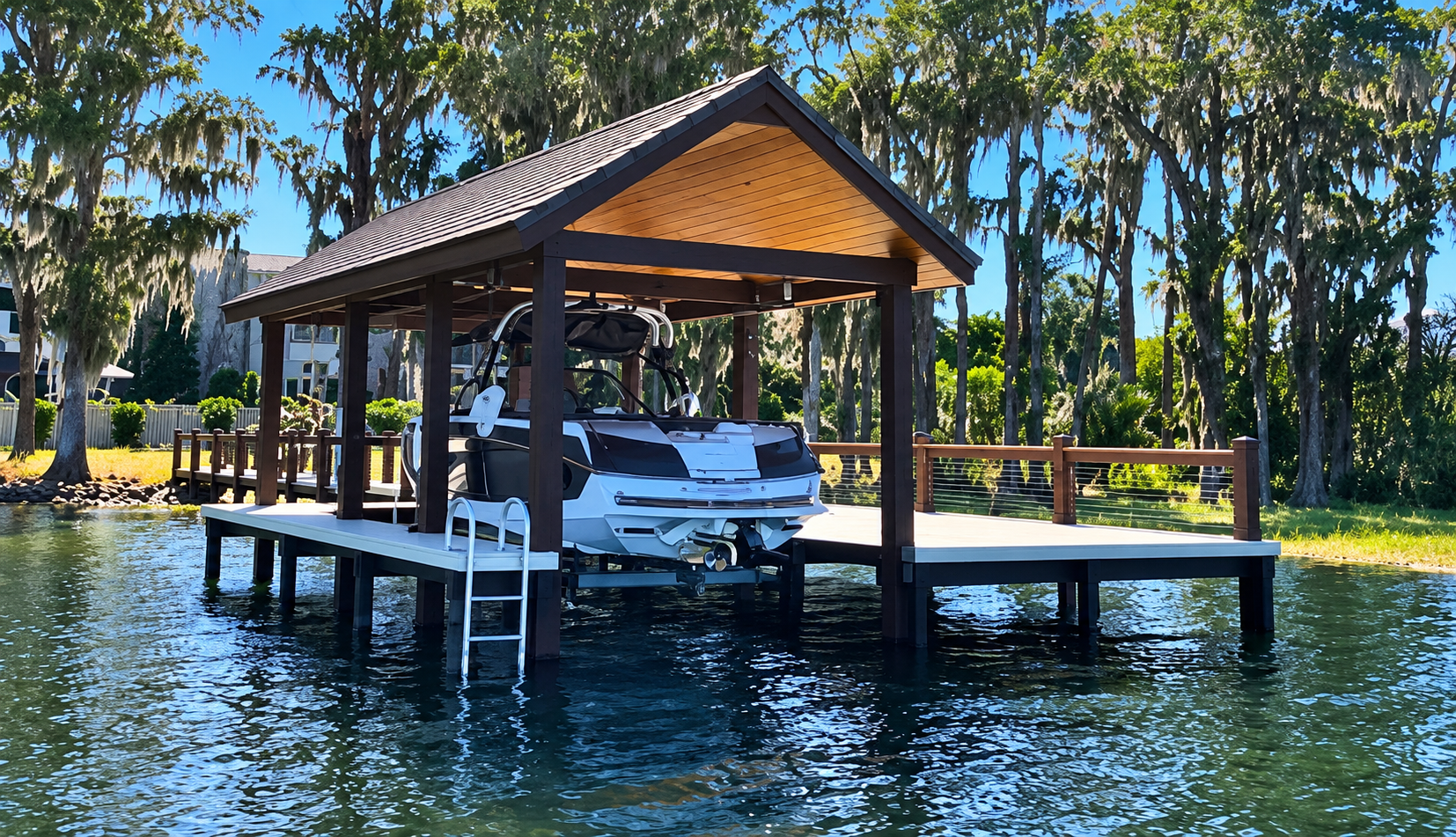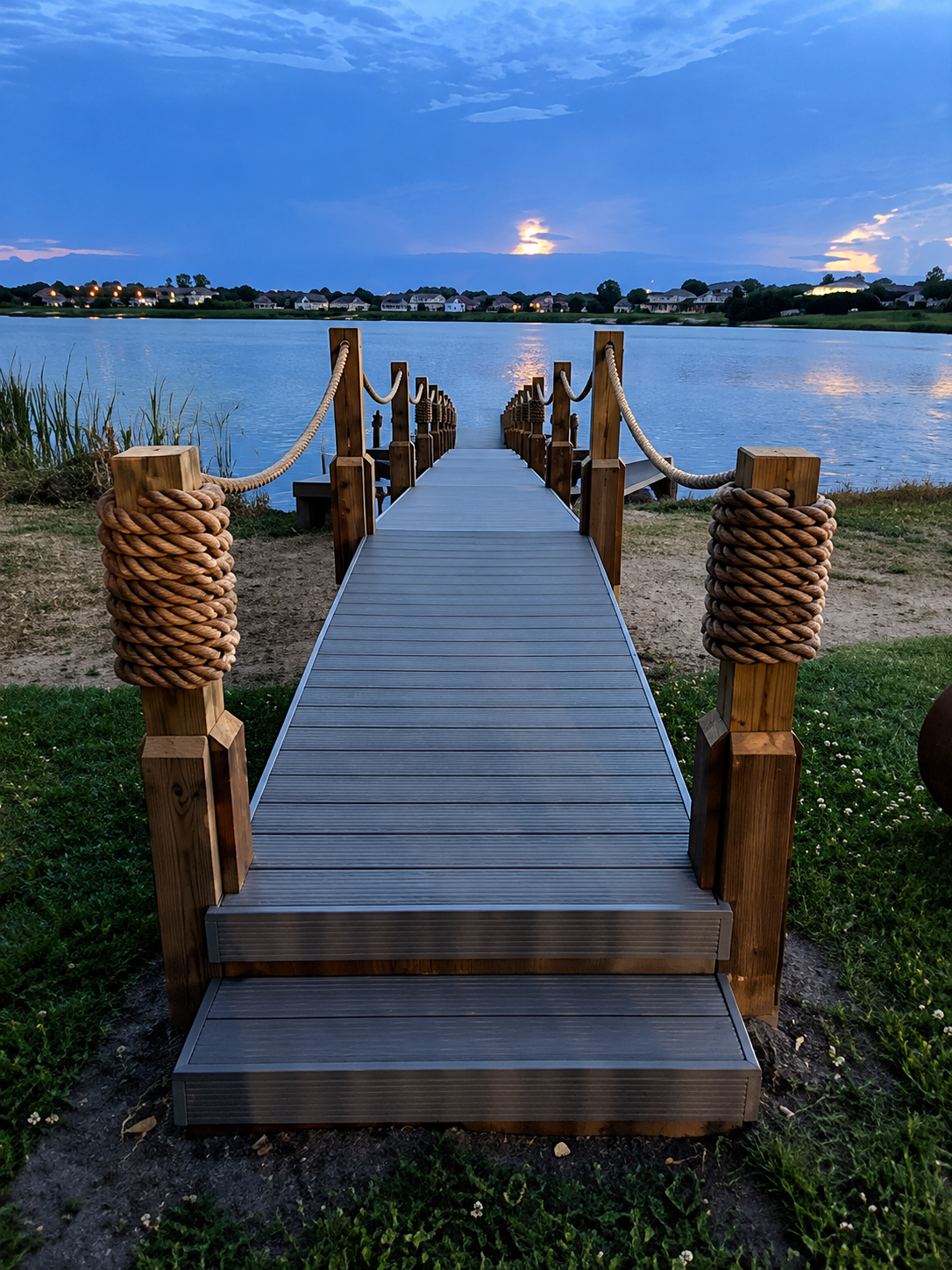
A dock that is showing its age is not always a dock that needs to come out. The hardest call in a waterfront project is deciding whether the surface wear you can see means the structure underneath is failing, or whether the frame is sound and only the decking needs work. Resurfacing a dock with a bad frame is money spent on a structure that is still failing, and rebuilding a dock that only needed new boards is money spent on work that was not necessary. The right call starts with an honest condition assessment.
The surface signs are what most homeowners notice first. Faded decking, loose boards, lifting fasteners, and a surface that is rough underfoot are the visible clues that a dock needs attention. But surface wear is a symptom, not a diagnosis. A board that has cupped and split may be a board that has reached the end of its life, or it may be a board that was installed incorrectly and is failing early. The question is not whether the surface looks tired, it is whether the structure underneath is still doing its job.
The frame is the structural question. The joists and beams that carry the decking, and the pilings that carry the frame, are what keep the dock level and stable. If the frame is sound, the pilings are plumb, the connections are tight, and the bracing is intact, then new decking and hardware can bring the dock back without a rebuild. If the frame has rot, the pilings have shifted, or the connections have loosened, then new boards on top are cosmetic, not structural, and the dock will keep moving under them.
The way to tell the difference is a condition assessment. A builder walks the dock, checks the pilings for plumb and for soundness, probes the framing for rot, tests the connections for looseness, and looks at the hardware for corrosion. That assessment is the basis for the resurface-or-rebuild call. Without it, the decision is a guess, and the guess is usually biased toward whatever is cheaper, which is not always what is right.
Resurfacing makes sense when the frame and pilings are sound and the decking has reached the end of its useful life. New decking boards, new fasteners, and a fresh surface can add years to a dock that is structurally fine but cosmetically tired. This is the project for a dock that is still level, still stable, and still safe, but whose surface has faded, split, or become a splinter hazard. The cost is a fraction of a rebuild, and the result is a dock that looks and feels new.
A full rebuild makes sense when the structural elements have failed or are failing. Pilings that have leaned, framing that has rotted, connections that have loosened, and bracing that has corroded are structural problems, and new decking does not solve them. A rebuild addresses the foundation and the frame, which is where the dock's life actually lives. The cost is higher, but the result is a dock with a new structural life, not just a new surface.
There is a middle path that shows up often. A dock may have sound pilings and framing but a section that has taken damage, a corner where a storm pushed debris, a boarding area where the lift has stressed the framing. In that case, a partial rebuild of the damaged section and a resurface of the rest can be the right answer. The assessment tells you which sections need structural work and which only need new boards, and the project targets the work where it is needed.
The material choice interacts with the resurface-or-rebuild call. If you are resurfacing, the new decking is the main decision, and a switch from wood to a composite or PVC can change how the dock performs and how much maintenance it needs going forward. If you are rebuilding, the structural materials are the first decision, and the decking is the second. A rebuild is also the moment to fix layout issues, a dock that is too narrow, a boarding area that is in the wrong place, a lift that is undersized, because the structure is already open.
The honest way to make the call is to have a builder assess the dock and tell you what is structural and what is cosmetic. Resurfacing a dock with a sound frame is a smart, lower-cost project. Rebuilding a dock with a failing frame is the right project, even if it costs more. The wrong call is the one that spends money on the wrong layer, and the assessment is what keeps the money on the right one.
If your dock is showing its age, the first step is not to pick a material or a color, it is to find out what is underneath the surface. A condition assessment tells you whether the dock needs new boards, new framing, or new pilings, and that is the information that turns a guess into a plan.
Ready to talk about your waterfront? We assess your shoreline, your watercraft, and how you use the water, then give you an honest, accurate estimate — no obligation.
Frequently Asked Questions
- How do I know if my dock needs resurfacing or a full rebuild?
- A condition assessment is the way to tell. A builder checks the pilings for plumb and soundness, probes the framing for rot, tests the connections, and looks at the hardware. If the frame and pilings are sound, resurfacing is enough; if they have failed, a rebuild is the right call.
- Can I just replace the boards on a tired dock?
- If the frame and pilings are sound, yes. New decking, fasteners, and a fresh surface can add years to a dock that is structurally fine but cosmetically tired. But if the frame has rot or the pilings have shifted, new boards are cosmetic and the dock will keep moving.
- What are the signs a dock needs a structural rebuild?
- Pilings that have leaned, framing that has rotted, connections that have loosened, and bracing that has corroded are structural problems. A dock that flexes, sags, or moves underfoot is telling you the structure, not just the surface, needs work.
- Can I rebuild just part of a dock?
- Yes. A dock may have sound pilings and framing but a damaged section. A partial rebuild of the damaged section, with a resurface of the rest, targets the work where it is needed. The assessment tells you which sections need structural work.
- Should I change materials when I resurface?
- Resurfacing is a good moment to switch from wood to a composite or PVC, which can change how the dock performs and how much maintenance it needs. A rebuild is the moment to also fix layout issues, because the structure is already open.