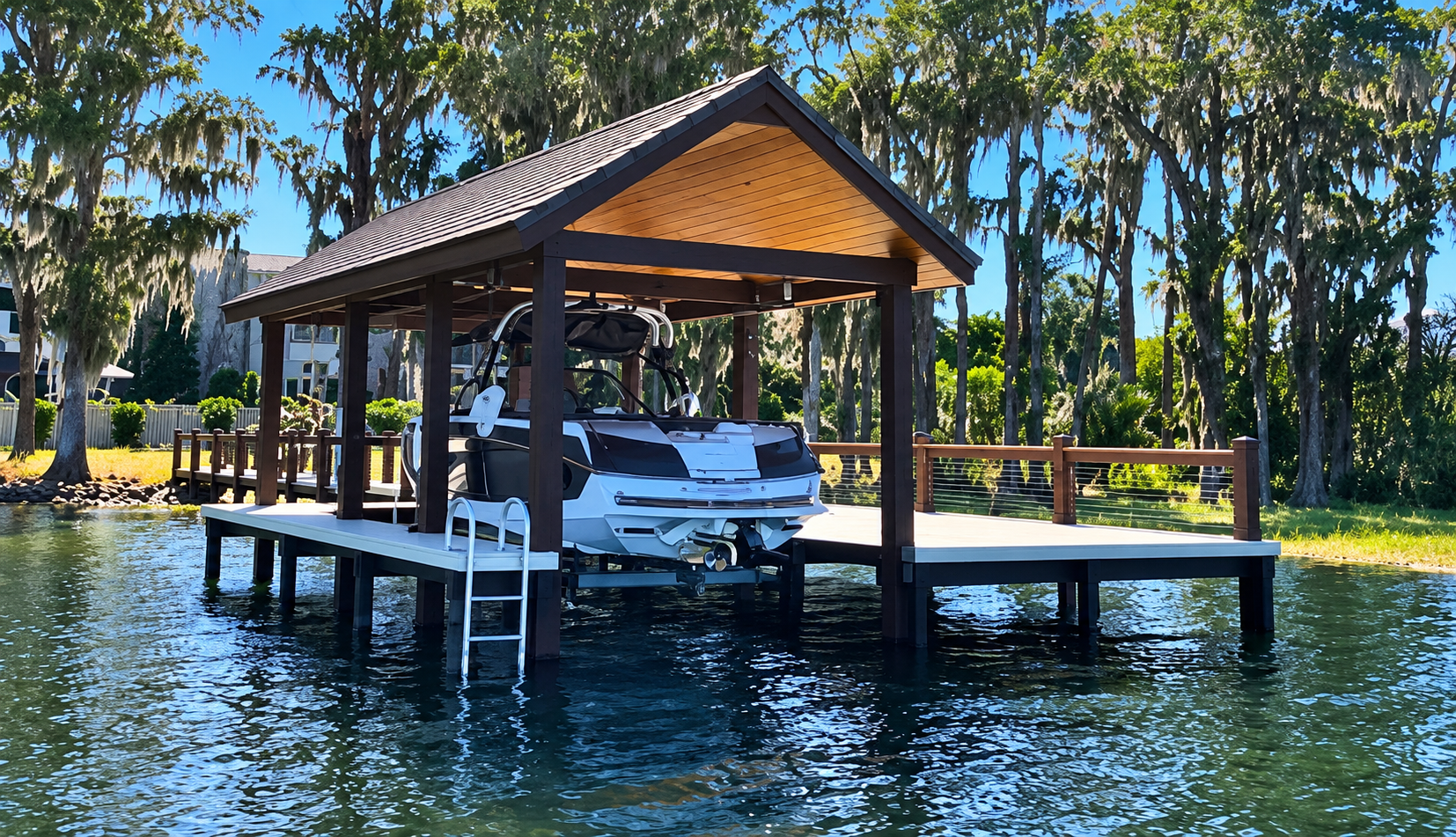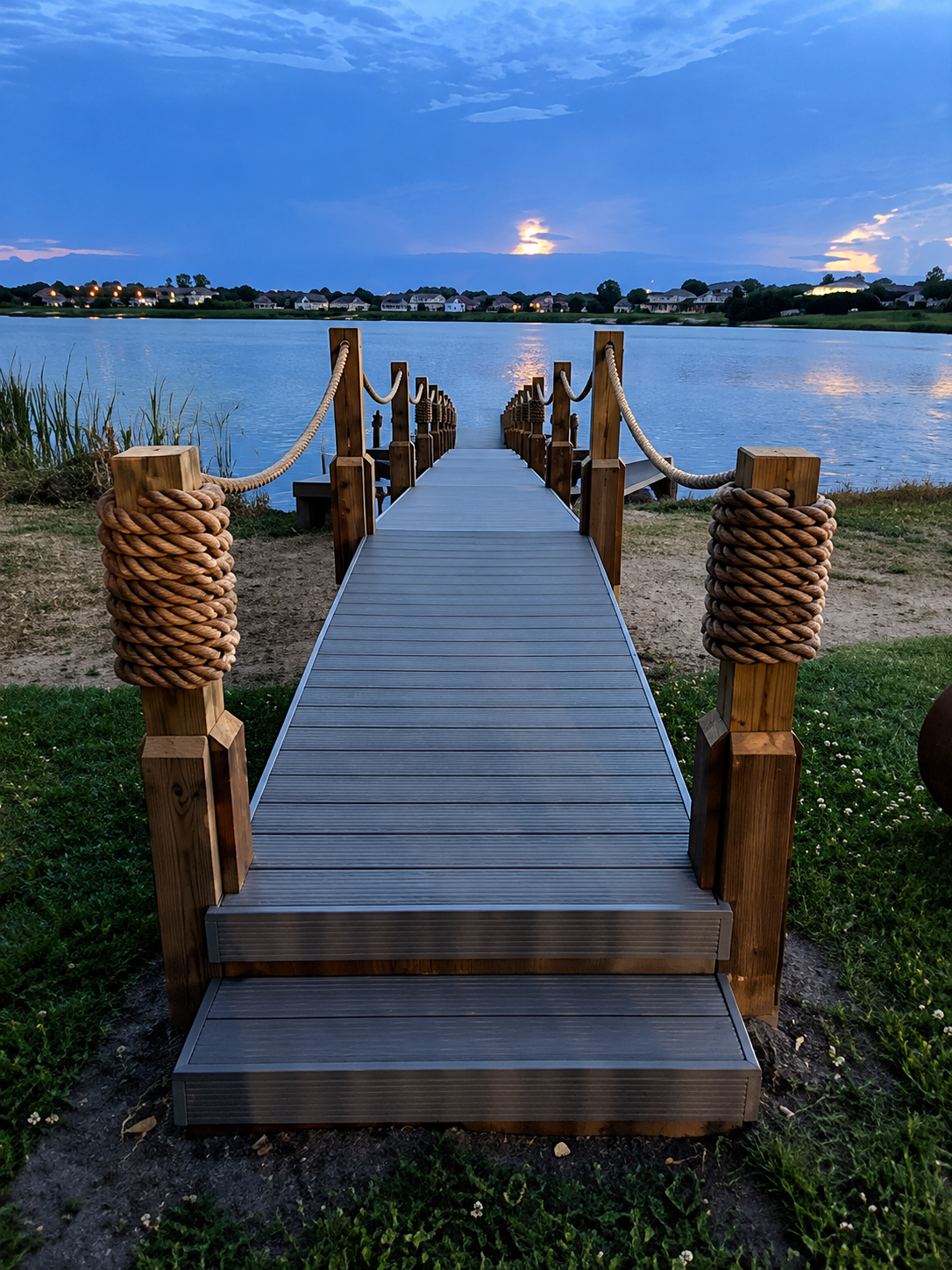
A dock with sound framing but tired decking is one of the most common conditions on a Florida lakefront, and it is also one of the most rewarding projects. The frame is still doing its job, but the surface you walk on has taken years of sun, rain, and foot traffic and is showing it. Upgrading the decking is the project that brings the dock back without the cost and disruption of a full rebuild, and it is also the moment to make the dock better, not just newer.
The signs that decking needs replacing are usually visible. Boards that have cupped, split, or checked are boards that have reached the end of their surface life. Fasteners that have lifted or corroded are hardware that is no longer holding the boards down the way it should. A surface that has become rough underfoot, or that has lost its grip when wet, is a surface that is becoming a safety issue, not just a cosmetic one. If the frame underneath is sound, these are all signs that a decking upgrade is the right project.
The first decision in a decking upgrade is the material. The original wood decking can be replaced with new wood boards, which is the most direct replacement and the lowest first cost. It can also be replaced with a wood-plastic composite, which resists the rot and insect damage that wood faces in a wet environment, or with a PVC or capped polymer product, which resists moisture and fading differently. Each material has a different maintenance profile and a different cost, and the right choice depends on how much upkeep you want to do and how the dock is used.
Wood decking is the familiar choice. Pressure-treated southern yellow pine is the standard residential dock decking in Central Florida, and it is strong, available, and cost-effective. Its tradeoff is maintenance. Wood decking needs periodic cleaning and sealing to protect it from the sun and moisture that Florida weather brings. A wood deck that is maintained holds up well; a wood deck that is ignored will fade, split, and eventually need replacing again. If you are willing to do the upkeep, wood is a sound choice, and it is the lowest first cost.
Composite decking, a blend of wood fibers and plastic, is the middle path. It resists rot and insect damage better than wood, and it does not require the same sealing routine. Its tradeoff is that it can retain heat in direct sun, and some composites can show surface wear over years of foot traffic. The color and finish choices matter, because a darker composite in full Florida sun can run hot underfoot. A composite upgrade is the right choice for a homeowner who wants lower maintenance than wood and is willing to choose a color and finish that handles the exposure.
PVC and capped polymer decking are the low-maintenance end of the spectrum. These products are plastic through and through (PVC) or have a plastic cap over a composite core (capped polymer), and they resist moisture, fading, and staining differently than wood or composite. They also tend to be cooler underfoot than a composite in direct sun, depending on the color. Their tradeoff is a higher first cost. For a dock that is used hard and maintained lightly, a PVC or capped polymer upgrade can pay off in reduced upkeep over the years.
The fasteners are part of the upgrade, not an afterthought. A decking upgrade is the moment to replace lifted or corroded fasteners with hardware that resists the Florida environment. Stainless or hot-dipped galvanized fasteners are standard on a dock built to last, and reusing old hardware on new boards is a false economy. The fasteners are what keep the boards down and the surface safe, and a decking upgrade that uses new, corrosion-resistant hardware lasts longer than one that does not.
The finish is the other part of the upgrade. Wood decking can be sealed or stained to protect it and to refresh its color. Composite and PVC decking usually do not require sealing, but their surface should be cleaned periodically to keep them looking fresh. A decking upgrade is a good moment to decide what level of upkeep you want to commit to, because the material you choose sets that routine for the life of the boards.
A decking upgrade is also the moment to fix the small layout issues that have bothered you. A board that has always been a trip hazard, a section that holds water instead of draining, a boarding area that is a little too narrow, these are all easier to address when the decking is already up. The frame is still doing its job, but the surface can be improved, not just replaced.
The way to approach a decking upgrade is to start with the frame. A builder confirms the framing is sound, then helps you choose a material that fits your maintenance tolerance and your budget, replaces the boards and the fasteners, and leaves you with a dock that looks and feels new without the cost of a rebuild. It is the project that respects the structure you have while improving the surface you use.
Ready to talk about your waterfront? We assess your shoreline, your watercraft, and how you use the water, then give you an honest, accurate estimate — no obligation.
Frequently Asked Questions
- How do I know if my decking needs replacing?
- Boards that have cupped, split, or checked, fasteners that have lifted or corroded, and a surface that has become rough or lost its grip when wet are signs a decking upgrade is due. If the frame underneath is sound, these are surface issues, not structural ones.
- Should I replace wood decking with the same material?
- You can, and new pressure-treated wood is the lowest first cost. But a decking upgrade is also the moment to switch to a composite or PVC, which can reduce the cleaning and sealing routine that wood requires in a Florida waterfront environment.
- Does composite decking get hot in the sun?
- It can. Composite can retain more heat than wood in direct sun, and a darker color runs hotter underfoot. The color and finish choice matters on a dock in full Florida sun, so choose a lighter color or a material that handles the exposure.
- Do I need to replace the fasteners too?
- Yes. A decking upgrade is the moment to replace lifted or corroded fasteners with stainless or hot-dipped galvanized hardware that resists the Florida environment. Reusing old hardware on new boards is a false economy.
- Can I fix layout issues during a decking upgrade?
- Yes. A board that is a trip hazard, a section that holds water, or a boarding area that is too narrow are all easier to address when the decking is already up. The frame is sound, but the surface can be improved, not just replaced.