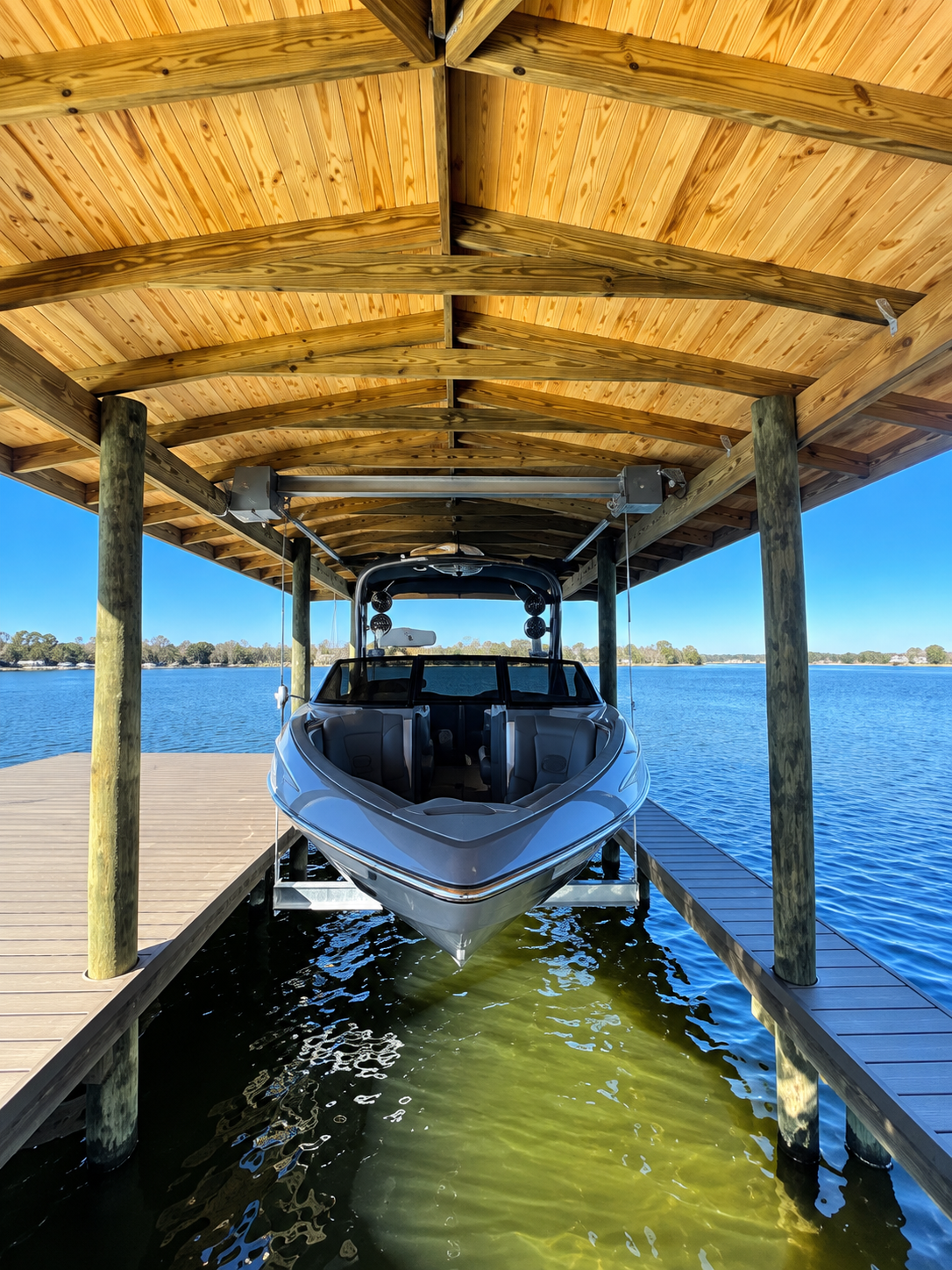
Cleaning and sealing a dock surface is the maintenance that protects the material and keeps it usable, and the right method depends on the material. A wood dock, a composite dock, and a PVC dock each need different care, and using the wrong method on the wrong material is how a maintenance routine becomes a damage routine. The right cleaning and sealing is the one that suits the surface you have.
Wood decking is the material that needs the most active care, and it is the one that benefits most from sealing. Wood in a Florida waterfront environment faces sun that bleaches it and moisture that promotes rot and algae. A wood deck should be cleaned periodically to remove the dirt, algae, and organic growth that hold moisture against the surface, and it should be sealed to protect it from the sun and moisture that Florida weather brings. The cleaning is usually a pressure wash at a setting that cleans without gouging the wood, and the sealing is a stain or clear sealant that is applied to a dry surface and allowed to cure.
The sealant choice for wood is a matter of the look and the protection. A clear sealant protects the wood and lets its natural color show, but it does not add color, which means fading is more visible. A stain adds color and protection, and it can refresh a wood deck that has faded. The color of the stain is a choice, but the protection is the point. A wood deck that is sealed lasts longer and looks better than one that is not, and the sealing routine is the cost of choosing wood.
Composite decking needs cleaning but not sealing. The composite surface does not require the protective sealant that wood does, but it does collect dirt, pollen, and algae in the Florida humidity, and a dirty composite surface is not just cosmetic, it is a surface that can become a slipping hazard when wet. The cleaning is usually a mild detergent and a soft brush or a low-pressure wash, and the goal is to remove the organic growth without damaging the surface. Composite decking should not be pressure washed at a high setting, because the pressure can damage the surface.
PVC and capped polymer decking are the lowest-maintenance surfaces, but they still need cleaning. The plastic surface resists staining and moisture, but it collects the same dirt, pollen, and algae that any outdoor surface does. The cleaning is usually a mild detergent and a soft brush, and the goal is to keep the surface looking fresh and to prevent the organic growth that can make it slippery. PVC decking generally does not require sealing, and the maintenance is the cleaning alone.
The cleaning frequency depends on the exposure and the use. A dock in full sun and high humidity may need cleaning more often than one in a shaded, breezy spot. A dock that is used heavily may need more frequent cleaning to keep the surface safe. The routine is not a calendar, it is a condition check, and the surface tells you when it needs cleaning by looking dirty or by becoming slippery when wet.
The sealing frequency for wood is usually every year or two, depending on the exposure and the sealant. A dock in full Florida sun may need sealing more often than one in partial shade, because the sun breaks down the sealant faster. The sealant is the protection that keeps the wood from fading and rotting, and the routine is the way to keep that protection in place.
The tools for cleaning and sealing are the part that most affects the result. A pressure washer that is too aggressive can damage any surface, wood, composite, or PVC. A brush that is too stiff can scratch a composite or PVC surface. The right tools are the ones that clean the surface without damaging it, and a builder or a maintenance service can help you choose the right approach if you are not sure.
The way to approach cleaning and sealing is to match the method to the material. Clean wood with a pressure wash at a safe setting, and seal it with a stain or clear sealant. Clean composite with a mild detergent and a soft brush, and do not seal it. Clean PVC the same way, and do not seal it. The maintenance is the way to protect the surface you have, and the right maintenance is the one that suits the material, not the one that is easiest.
A dock that is cleaned and sealed on a routine lasts longer and stays safer than one that is not, and the routine is the cost of owning a waterfront structure in Florida. The right method is the one that protects the material without damaging it, and the right frequency is the one that keeps the surface in the condition it was built to be in.
Ready to talk about your waterfront? We assess your shoreline, your watercraft, and how you use the water, then give you an honest, accurate estimate — no obligation.
Frequently Asked Questions
- How do I clean a wood dock?
- Clean wood decking with a pressure wash at a setting that cleans without gouging the wood, to remove dirt, algae, and organic growth that hold moisture against the surface. Then seal it with a stain or clear sealant to protect it from the sun and moisture that Florida weather brings.
- Does composite decking need sealing?
- No. Composite decking does not require the protective sealant that wood does, but it does need cleaning to remove the dirt, pollen, and algae that collect in the Florida humidity. Use a mild detergent and a soft brush or a low-pressure wash, not a high setting that can damage the surface.
- How do I clean PVC dock decking?
- PVC and capped polymer decking are low-maintenance but still need cleaning. Use a mild detergent and a soft brush to remove the dirt, pollen, and algae that any outdoor surface collects. PVC generally does not require sealing, so the maintenance is the cleaning alone.
- How often should I clean and seal my dock?
- It depends on the exposure and the use. A dock in full sun and high humidity may need cleaning more often than one in a shaded spot. Wood sealing is usually every year or two, depending on the exposure and the sealant. The routine is a condition check, not a calendar.
- Can I pressure wash my dock?
- Yes, but at the right setting. A pressure washer that is too aggressive can damage any surface, wood, composite, or PVC. The right tools clean the surface without damaging it. If you are not sure of the right setting, a builder or maintenance service can help.