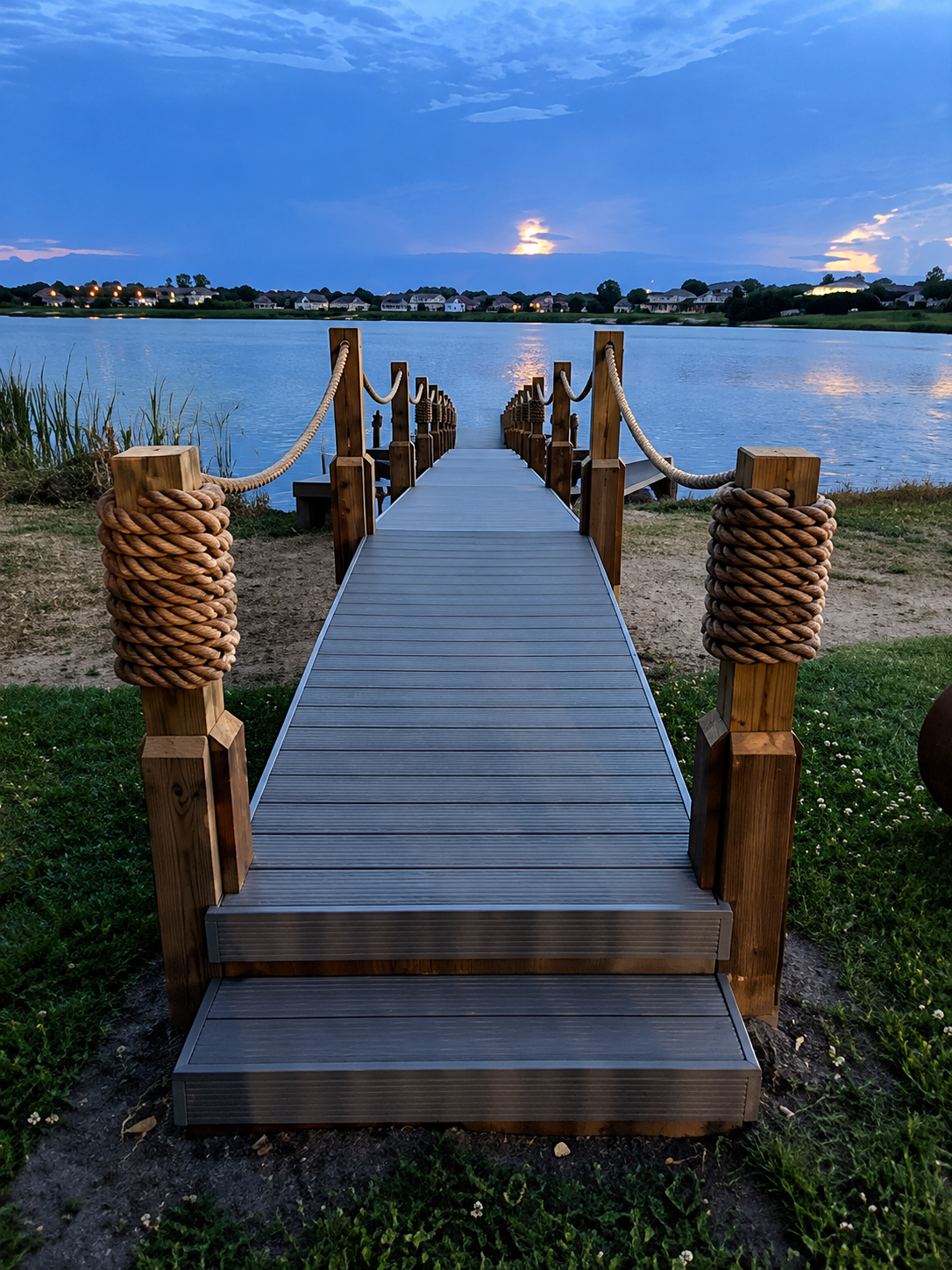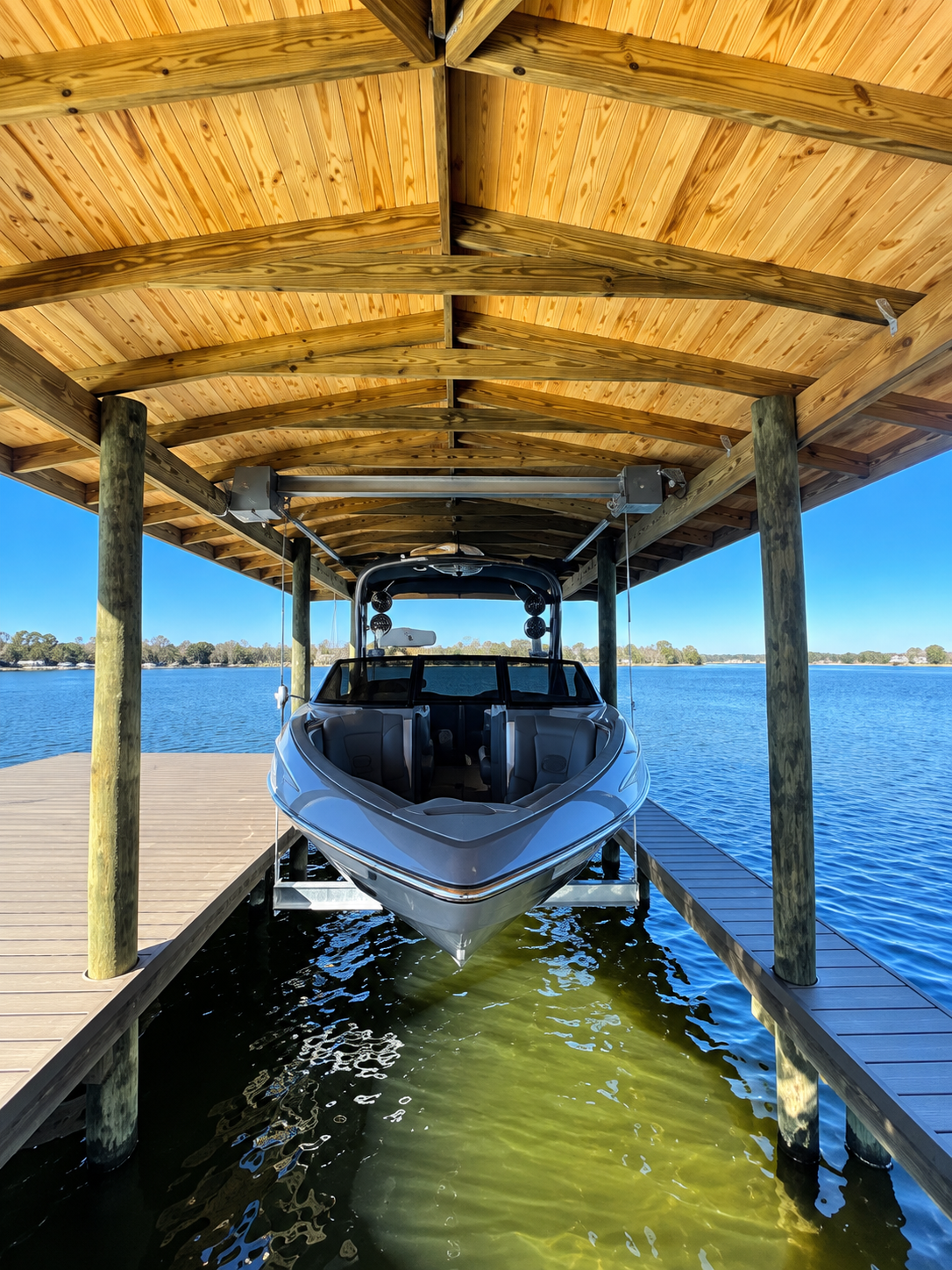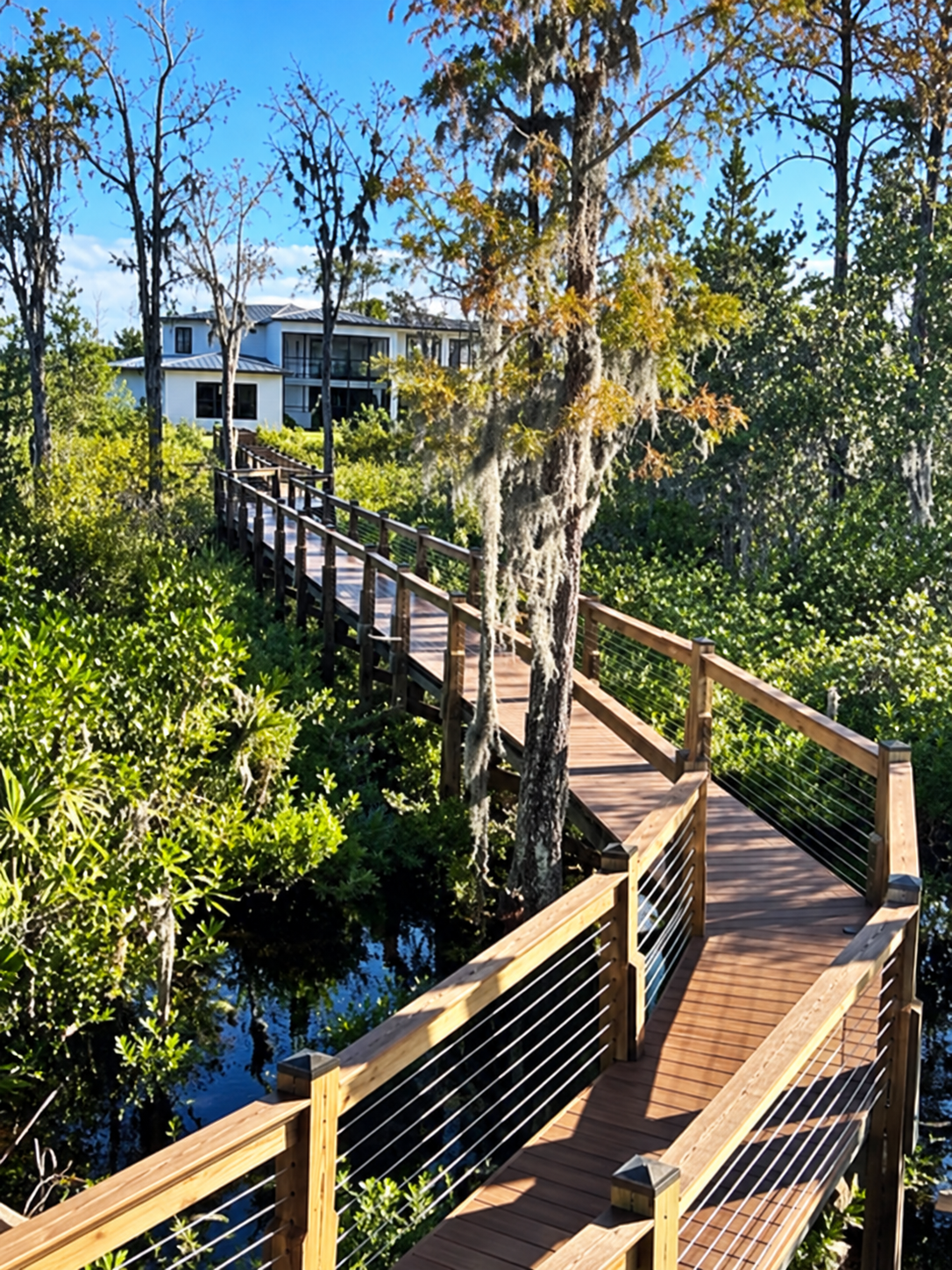
Storm season stresses every dock on the lake, and the inspection after the season is the way to find out what the stress did to yours. A dock can come through a storm season with no visible damage and still have taken a load that loosened a connection or shifted a piling. The post-storm-season inspection is the way to catch that hidden stress before it becomes a failure, and it is the way to know whether the dock is ready for another year or whether it needs work.
The inspection starts with the structure, because the structure is what the storm tested. Walk the dock and look at the pilings first. A piling that has shifted, leaned, or settled is a piling that took a lateral load it was not braced for, and it is a piling that will shift more in the next storm. The pilings should be plumb and solid, and any movement is a sign that the foundation needs attention.
The framing is the next structural check. Look at the joists and beams that carry the decking, and look for any sag, any split, or any separation from the pilings. The framing should be level and tight, and any movement is a sign that a connection has loosened or a member has been stressed. A frame that has moved is a frame that will move more, and the inspection is the time to find it.
The connections are the points that most often fail in a storm. The bolts, brackets, and hardware that hold the frame to the pilings are the points where the load transfers, and they are the points that loosen under stress. Check each connection for tightness and for corrosion, because a connection that has loosened or corroded is a connection that will fail under the next load. The hardware is the part of the structure that most needs the post-storm check.
The bracing is the lateral support, and it is the part of the structure that resists the wind and wave action a storm brings. Look at the diagonal bracing for any looseness, any corrosion, or any damage. The bracing is what keeps the dock from swaying, and a brace that has loosened is a brace that is not doing its job. The post-storm check of the bracing is the check that most directly addresses the storm's effect.
The surface is the next level of the inspection. Walk the decking and look for boards that have lifted, cupped, or split, and look for fasteners that have loosened or corroded. A storm can drive water under and through the decking, and the surface wear that results is not just cosmetic, it is a sign of the stress the storm put on the dock. The surface inspection is the one that most directly affects the safety of the dock, because a loose board or a lifted fastener is a trip hazard.
The accessories are the last level, and they are the parts that most often take storm damage. The railings, the lighting, the lift, and the boarding ladder are all attached to the dock, and a storm can loosen or damage any of them. Check the railings for play at the posts, the lighting for damage, the lift for operation, and the ladder for security. The accessories are the parts that are most exposed, and they are the parts that most need the post-storm check.
The inspection is not just a look, it is a judgment about what to fix and what to watch. A piling that has shifted a small amount may be watched, but a piling that has shifted enough to be visible is a piling that should be addressed. A connection that has loosened may be tightened, but a connection that has corroded should be replaced. The judgment is about what is cosmetic and what is structural, and the inspection is what gives you the information to make that call.
The inspection is also the moment to decide whether to call a builder. Some issues, like a loose board or a lifted fastener, are homeowner repairs. Others, like a shifted piling or a corroded connection, are structural issues that should be assessed and repaired by a builder who knows dock construction. The inspection is the way to know which is which, and the judgment is about knowing what you can handle and what needs a professional.
The way to do the inspection is to walk the dock with a specific eye for what the storm would have tested. Start at the pilings, move to the framing, check the connections, look at the bracing, walk the surface, and check the accessories. Note what has changed, what feels loose, and what looks different than it did before the season. The inspection is the way to catch the stress before it becomes the failure, and it is the way to know that the dock is ready for another year.
A dock that is inspected after each storm season is a dock whose owner knows its condition, and a dock that is known is a dock that gets the right work at the right time. The inspection is the cheapest maintenance you can do, and it is the one that most directly protects the investment you have made in the waterfront.
Ready to talk about your waterfront? We assess your shoreline, your watercraft, and how you use the water, then give you an honest, accurate estimate — no obligation.
Frequently Asked Questions
- What should I inspect on my dock after storm season?
- Start with the structure, the pilings for plumb, the framing for level and tight connections, and the bracing for looseness or corrosion. Then walk the surface for loose boards and lifted fasteners, and check the accessories like railings, lighting, the lift, and the ladder.
- How do I know if a storm shifted my pilings?
- A piling that has shifted, leaned, or settled is one that took a lateral load it was not braced for. The pilings should be plumb and solid. Any visible movement is a sign the foundation needs attention, and a shifted piling will shift more in the next storm.
- What connections are most likely to fail in a storm?
- The bolts, brackets, and hardware that hold the frame to the pilings are the points where the load transfers, and they are the points that loosen under stress. Check each connection for tightness and corrosion, because a loosened or corroded connection will fail under the next load.
- When should I call a builder after storm season?
- Some issues, like a loose board or a lifted fastener, are homeowner repairs. Structural issues, like a shifted piling, a corroded connection, or a loose brace, should be assessed and repaired by a builder who knows dock construction. The inspection tells you which is which.
- Can a dock have hidden storm damage?
- Yes. A dock can come through a storm with no visible damage and still have taken a load that loosened a connection or shifted a piling. The post-storm-season inspection is the way to catch that hidden stress before it becomes a failure.