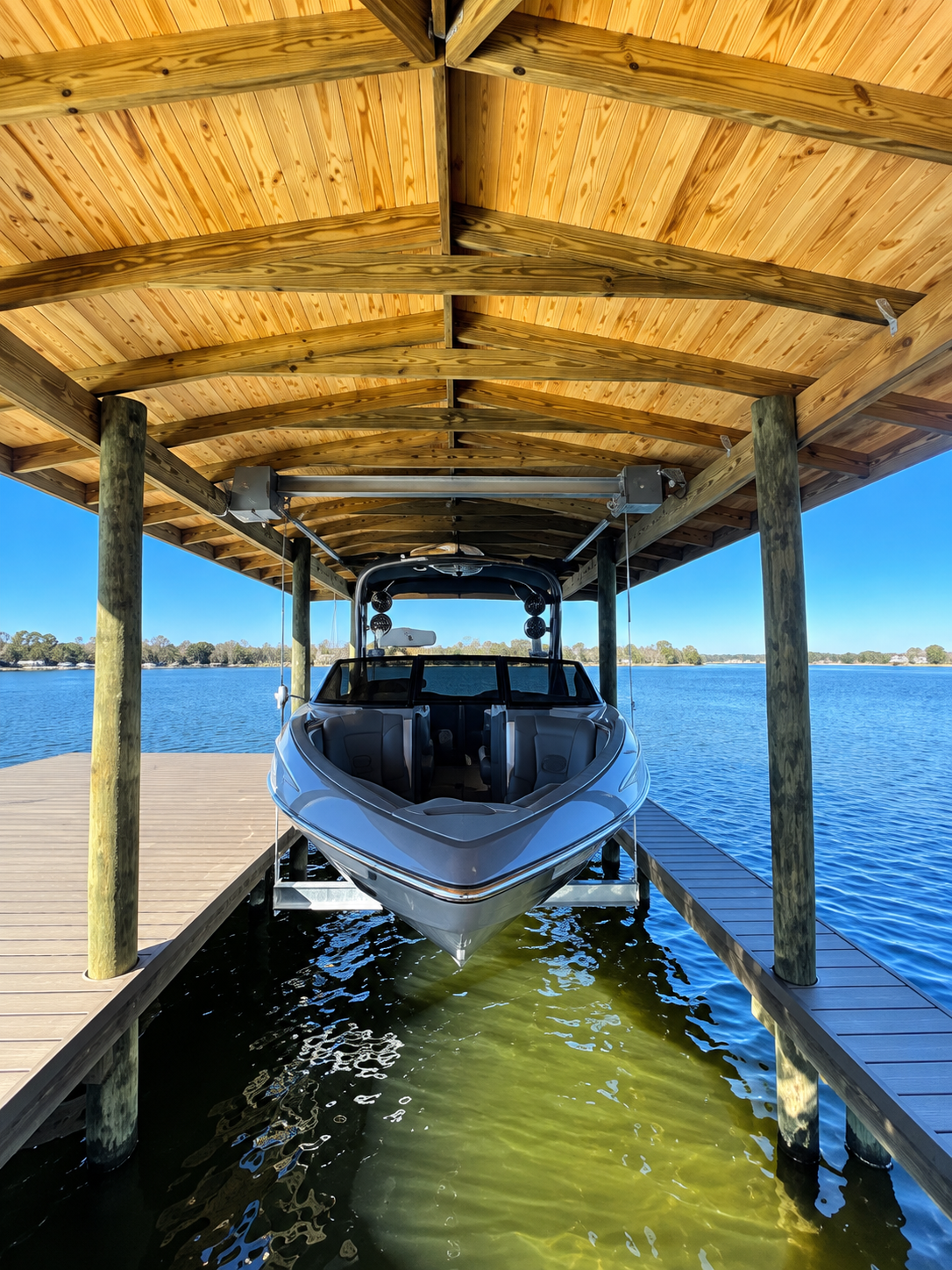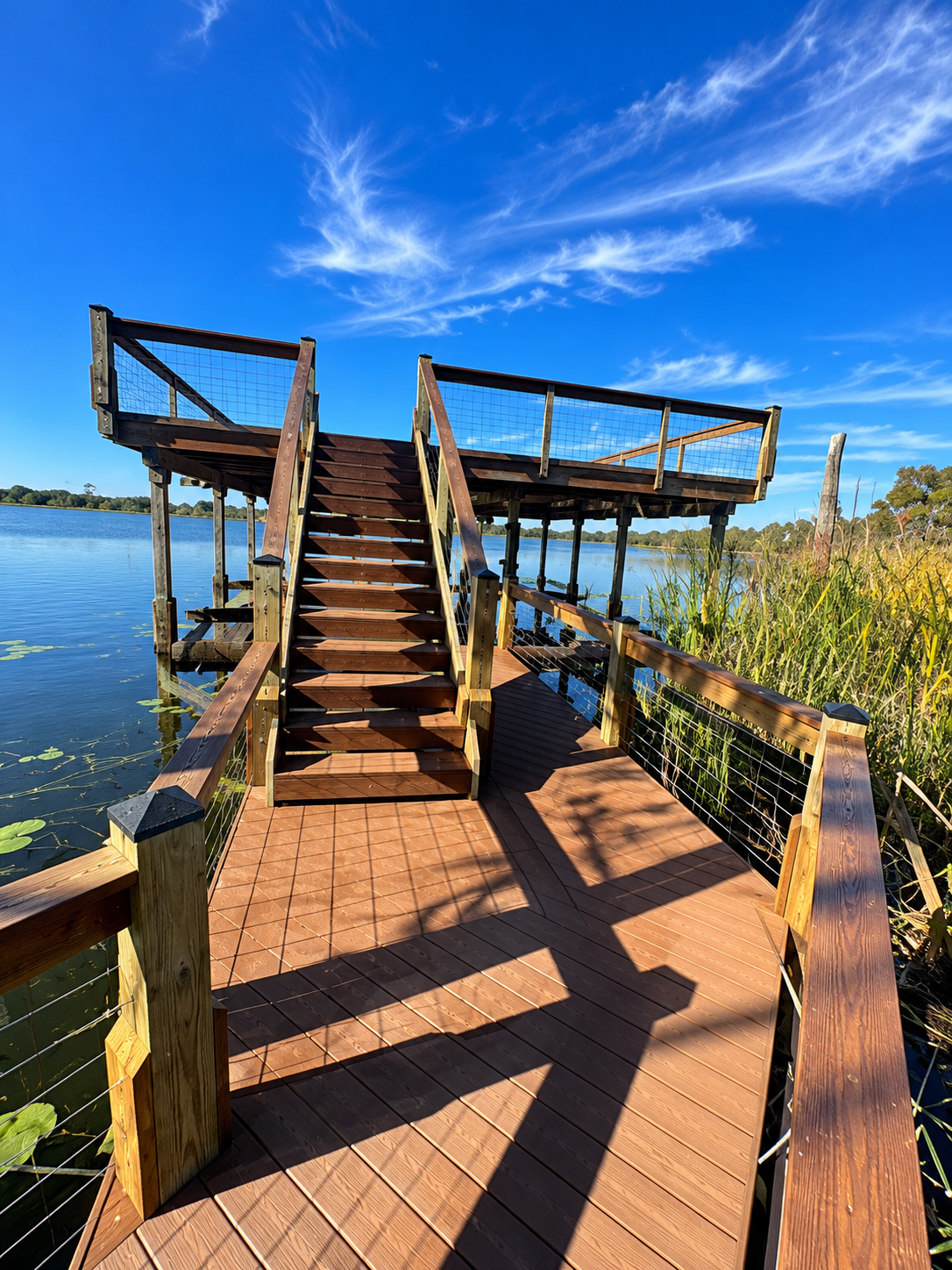
Rot in a piling is not a surface problem, and it is not a problem that goes away with attention. A rotting piling is a piling that has lost structural capacity, and the dock that sits on it is being held up by a post that is no longer doing its job. Replacing a rotting piling is the repair that restores the foundation, and it is the repair that keeps the rest of the dock from failing as the piling loses more capacity.
The way rot gets into a piling is through the constant moisture that a dock environment provides. A piling that is in the water, or in the splash zone above the water, is wet for much of its life, and the moisture is what the rot feeds on. The rot usually starts at the waterline, where the moisture and the oxygen meet, and it works into the piling from there. A piling that is caught early may have surface rot that can be addressed, but a piling that has rot working into the core is a piling that needs replacement.
The assessment is the first step. A builder probes the piling at the waterline and along the submerged section to find the extent of the rot. A piling that is firm at the surface but soft when probed is a piling that has rot below the surface, and the probe is the way to find it. The assessment tells you whether the piling can be reinforced or whether it needs to be replaced, and the judgment is about how much capacity the piling has lost.
A piling that has surface rot but retains its core capacity may be a candidate for reinforcement. A wrap or a jacket can be installed around the piling to protect it from further moisture and to provide some structural support, and the existing piling continues to carry the load. This is a repair that works for pilings that are caught early, and it is a lower-cost repair than a full replacement. The tradeoff is that the existing piling is still losing capacity, and the reinforcement is a delay, not a cure.
A piling that has rot working into the core is a piling that needs replacement. The replacement involves pulling the old piling, driving a new piling in its place, and reconnecting the framing to the new piling. The new piling is driven to the same depth and with the same treatment as the original, and the connection is rebuilt to the same standard. This is the repair that restores the foundation to full capacity, and it is the repair that the dock's safety depends on.
The framing is the other structural element that may need replacement. A joist or beam that has rotted, split, or sagged is a framing member that is no longer carrying its load, and the decking above it will show the effect. Replacing a damaged framing member involves removing the old member, installing a new one of the same size and species, and reconnecting it to the pilings and the adjacent framing. The repair is about restoring the frame to the capacity it was designed for.
The connections are the part of the framing that most often needs attention. A connection that has corroded has lost material, and it is a connection that will fail under load. Replacing the hardware, the bolts and brackets that hold the frame to the pilings, is the repair that restores the connection. The new hardware should be stainless or hot-dipped galvanized, which resists the Florida environment better than the hardware it replaces.
The repair is not just about the element that failed, it is about the structure around it. A piling that has rotted may have put extra load on the adjacent pilings, and the framing that sat on it may have stressed as the piling settled. A framing member that has split may have been carrying extra load because an adjacent member failed first. The repair is about the structure, not just the element, and a builder who assesses the whole dock can tell you what needs work and what can be watched.
The material choices for the repair matter. A replacement piling should be pressure-treated to a level appropriate for a submerged, wet environment, which is a higher treatment level than a dry-use piling. A replacement framing member should be the same size and species as the original, or an upgrade, and it should be treated for the exposure. The hardware should be corrosion-resistant. The repair is the moment to use materials that will last, not just materials that are cheapest.
The way to approach the repair is to assess first. A builder walks the dock, probes the pilings, checks the framing, and tests the connections, and the assessment is the basis for the repair plan. The plan tells you which pilings need replacement, which framing members need work, and which connections need hardware, and the repair targets the work where it is needed. The repair is the project that restores the structure, and the assessment is what makes it the right repair, not just a repair.
A dock with a rotting piling is a dock whose foundation is failing, and the repair is the way to stop the failure. The replacement is the project that restores the piling to full capacity, and the assessment is the way to know whether the piling needs replacement or whether it can be reinforced. The repair is the investment that keeps the rest of the dock standing, and it is the repair that the safety of the dock depends on.
Ready to talk about your waterfront? We assess your shoreline, your watercraft, and how you use the water, then give you an honest, accurate estimate — no obligation.
Frequently Asked Questions
- How do I know if a dock piling has rot?
- A builder probes the piling at the waterline and along the submerged section to find the extent of the rot. A piling that is firm at the surface but soft when probed has rot below the surface. The assessment tells you whether it can be reinforced or needs replacement.
- Can a rotting piling be repaired without replacement?
- Sometimes. A piling with surface rot that retains its core capacity may be a candidate for a wrap or jacket that protects it from further moisture and adds some support. But the existing piling is still losing capacity, so the reinforcement is a delay, not a cure. A piling with core rot needs replacement.
- What is involved in replacing a dock piling?
- The old piling is pulled, a new pressure-treated piling is driven in its place to the same depth, and the framing is reconnected with new, corrosion-resistant hardware. The new piling should be treated to a level appropriate for a submerged, wet environment.
- When does dock framing need replacement?
- A joist or beam that has rotted, split, or sagged is no longer carrying its load, and the decking above it will show the effect. Replacing it involves removing the old member, installing a new one of the same size and species, and reconnecting it to the pilings and adjacent framing.
- Should I replace corroded dock hardware?
- Yes. A connection that has corroded has lost material and will fail under load. Replacement hardware should be stainless or hot-dipped galvanized, which resists the Florida environment better than the hardware it replaces.