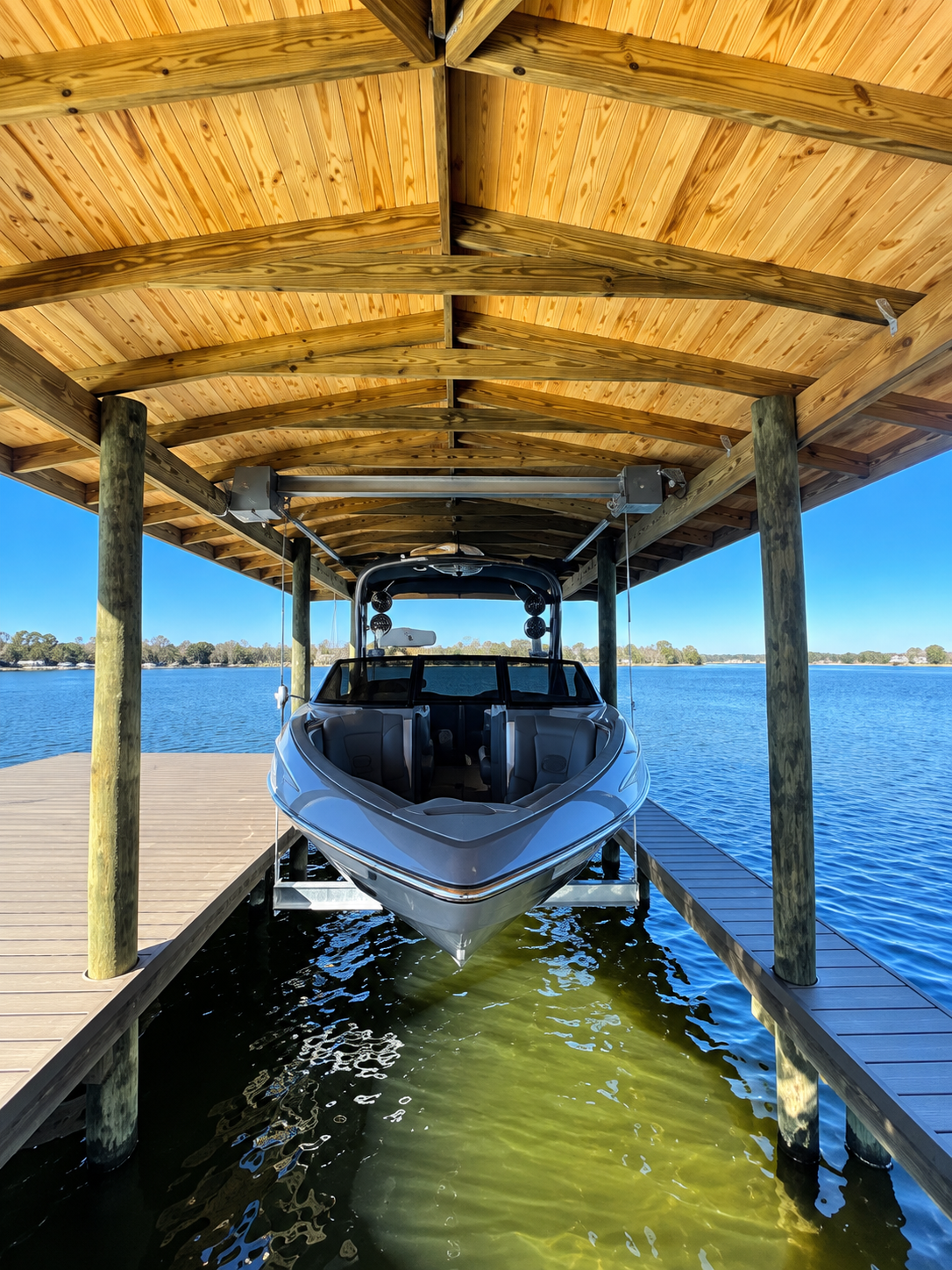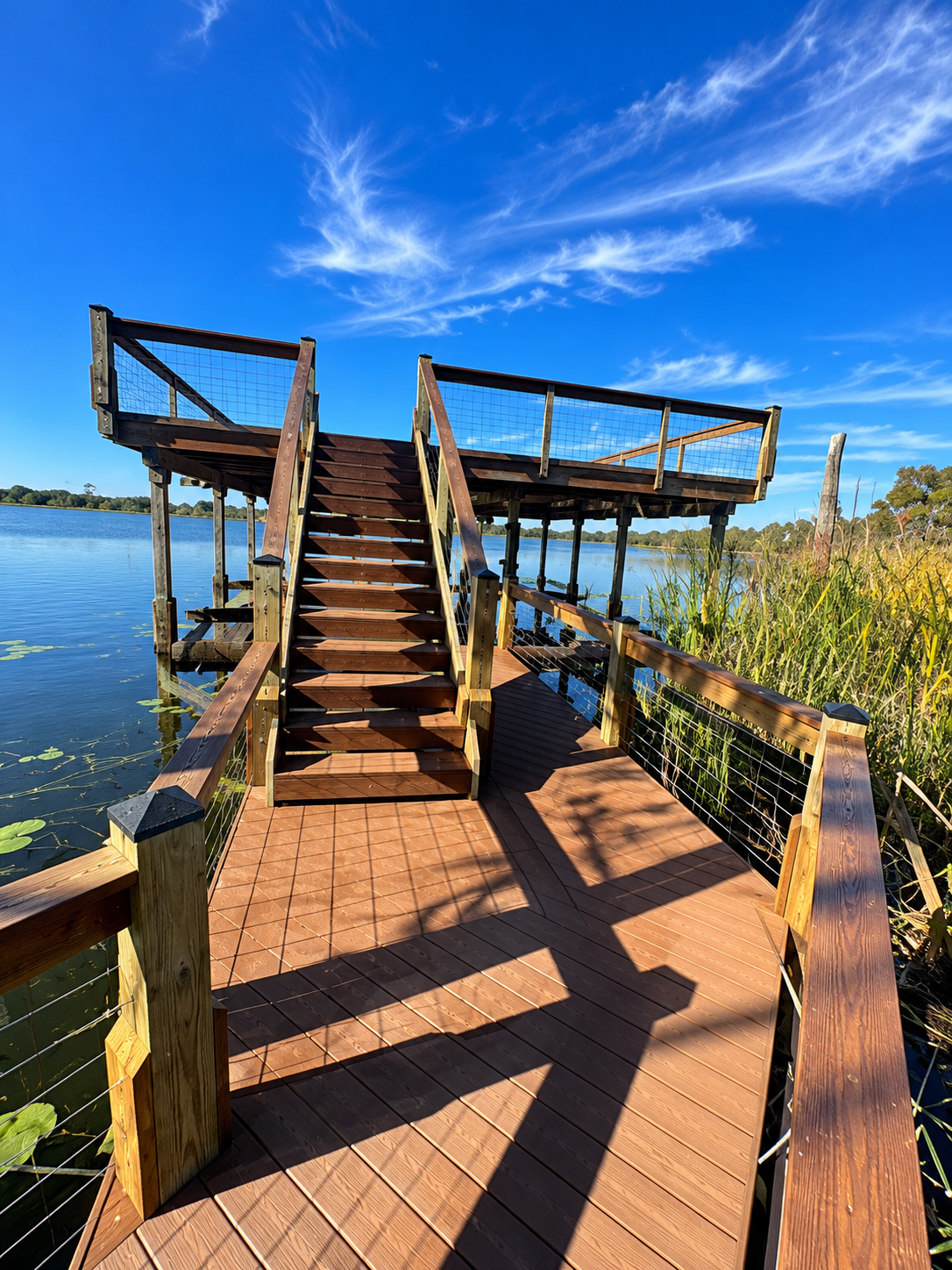
A loose board or a corroded bolt is a small problem that becomes a big one if it is not addressed. The everyday wear on a dock shows up first in the small connections, the fasteners that hold the boards down, the hardware that holds the frame to the pilings, and the brackets that hold the accessories. These are the parts that loosen with use and corrode with time, and fixing them is the maintenance that keeps the small problems from becoming the structural ones.
The loose board is the most common small repair, and it is the one that most directly affects safety. A board that has lifted at a fastener is a trip hazard, and a board that has cupped or split is a splinter hazard. The fix depends on what caused the looseness. A board that has lifted because the fastener has loosened can be re-secured with the same or a larger fastener, if the framing underneath is sound. A board that has cupped or split may need replacement, because the board itself has failed, not just the fastener. The judgment is about whether the board or the fastener is the problem.
The fastener is the part that holds the board down, and it is the part that most often needs attention. A fastener that has loosened can be tightened or replaced, and a fastener that has corroded should be replaced. The replacement should be a stainless or hot-dipped galvanized fastener, which resists the Florida environment better than the hardware it replaces. Reusing a corroded fastener is a false economy, because the corrosion is the material loss that will cause the next failure.
The hardware that holds the frame to the pilings is the structural connection, and it is the part that loosens with the lateral loads the dock sees. A bolt that has loosened can be tightened, and a bracket that has corroded should be replaced. The connection is the point where the load transfers from the frame to the piling, and a loose or corroded connection is a connection that will fail under the next load. The hardware is the part of the structure that most needs the attention, because it is the part that most directly carries the stress.
The brackets that hold the accessories, the railings, the lighting, the lift, are the connections that most often need the small repair. A railing that has developed play at the post has a bracket that has loosened, and the fix is to tighten or replace the bracket. A light that has come loose has a fixture that needs re-securing. A lift that has shifted may have a mount that needs attention. The accessories are attached to the dock, and their connections are the ones that most directly affect the safety and the use of the dock.
The way to fix a loose board is to first determine whether the board or the fastener is the problem. If the board is sound and the fastener has loosened, re-secure the board with a new, corrosion-resistant fastener of the same or a larger size. If the board has cupped or split, replace the board with a new one of the same material and size, and secure it with new fasteners. The fix is about the board, not just the fastener, and the judgment is about what has actually failed.
The way to fix a corroded connection is to replace the hardware. Remove the corroded bolt or bracket, clean the hole or the surface, and install a new stainless or hot-dipped galvanized piece of the same size. The replacement should be the same size, not smaller, because the connection was designed for the hardware it had. The fix is about restoring the connection to the capacity it was designed for, not just about making it look new.
The way to fix a loose accessory is to address the connection between the accessory and the dock. A railing post that has loosened in the framing may need a new bracket or a new fastener, and the framing around it may need attention if the post has torn the wood. A light that has come loose may need a new mount. A lift that has shifted may need a mount adjustment or a structural review. The accessory is attached to the dock, and the fix is about the attachment, not just the accessory.
The maintenance that prevents the small problems is the routine that catches the loose boards and the corroded fasteners before they become the structural failures. A seasonal walk of the dock, with a specific eye for what has loosened and what has corroded, is the way to catch the small issues. The small repair, done on time, is the maintenance that keeps the dock safe and usable, and it is the repair that costs the least because it is done before the problem grows.
The way to approach the small repairs is to walk the dock with a screwdriver and a wrench and a notebook. Note what has loosened, what has corroded, and what needs a fastener or a board. The small repairs are the ones a homeowner can handle, and the structural ones, the corroded connections, the loose bracing, are the ones that may need a builder. The judgment is about what is small and what is structural, and the walk is what gives you the information to make that call.
A dock that gets the small repairs on time is a dock that does not need the big ones as often. The loose board that is re-secured does not become the section that has to be rebuilt. The corroded fastener that is replaced does not become the connection that fails. The small repair is the maintenance that protects the investment, and it is the repair that the safety and the life of the dock depend on.
Ready to talk about your waterfront? We assess your shoreline, your watercraft, and how you use the water, then give you an honest, accurate estimate — no obligation.
Frequently Asked Questions
- How do I fix a loose dock board?
- First determine whether the board or the fastener is the problem. If the board is sound and the fastener has loosened, re-secure it with a new corrosion-resistant fastener. If the board has cupped or split, replace the board and secure it with new fasteners.
- Should I replace corroded dock fasteners?
- Yes. A corroded fastener has lost material and will fail under load. Replace it with a stainless or hot-dipped galvanized fastener of the same or a larger size. Reusing a corroded fastener is a false economy, because the corrosion is the material loss that causes the next failure.
- What causes dock hardware to loosen over time?
- The lateral loads a dock sees from wind, wave action, and foot traffic loosen the hardware over time. The bolts, brackets, and connections that hold the frame to the pilings are the points where the load transfers, and they are the points that loosen and corrode. A seasonal check catches them.
- Can I fix a loose railing on my dock?
- It depends on the cause. A railing post that has loosened at the bracket can be re-secured with a new bracket or fastener. A post that has torn the framing around it needs the framing addressed too. The fix is about the attachment between the railing and the dock, not just the railing itself.
- When is a loose board a structural issue?
- A loose board is cosmetic if the framing underneath is sound. It is structural if the framing has sagged or moved, because the board is loose because its support has failed. The judgment is about what is underneath the surface, and a walk of the dock with an eye for the framing tells you which is which.