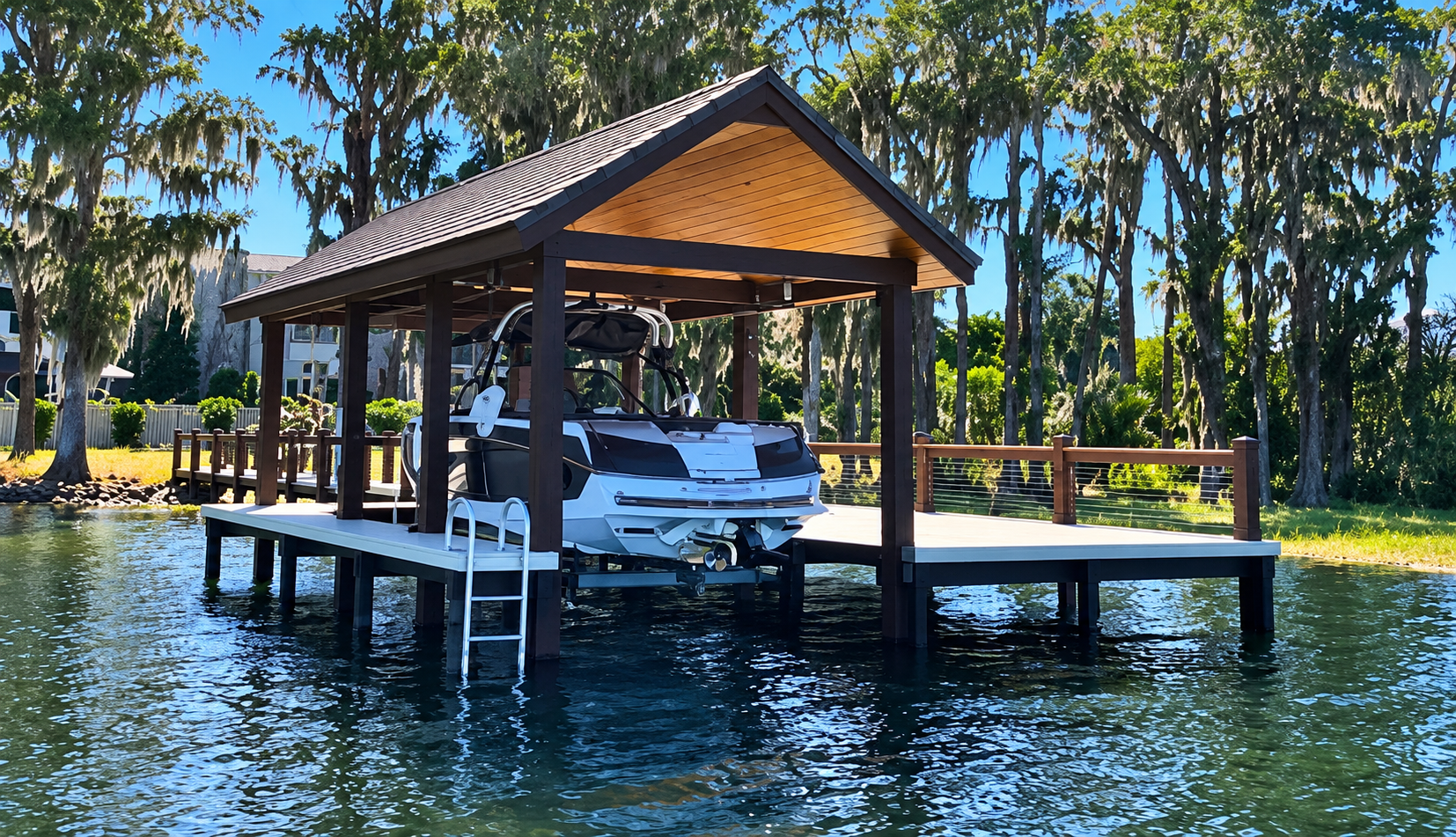
A boat lift canopy is the cover that sits over the lift and the boat, and it is the accessory that most changes how the boat is stored and how the lift hardware holds up. A canopy keeps the sun and the rain off the boat, which protects the boat's finish, the upholstery, and the lift's hardware, and it extends the life of both. The canopy is the addition that turns a lift from a lifting device into a covered storage system, and it is the accessory that the boat and the lift both benefit from.
The canopy's main job is shade. A boat that sits in the Florida sun without cover takes a beating, from the UV that fades the finish to the heat that ages the upholstery and the hardware. A canopy over the lift keeps the sun off the boat when it is stored, which protects the boat and reduces the maintenance it needs. The shade is the practical reason for a canopy, and it is the reason most dock owners add one.
The canopy also sheds rain, which keeps the boat dry and the lift's hardware out of the direct weather. A boat that is stored wet is a boat that is more prone to mildew and corrosion, and a canopy that sheds the rain keeps both the boat and the lift in better condition. The rain protection is the other practical reason, and it is the one that extends the life of the lift's moving parts.
The wind is the tradeoff of a canopy, and it is the consideration that has to be weighed. A canopy adds surface area, which means more wind load on the lift and the dock in a storm. A canopy that is well-built and well-secured handles the wind, but a canopy that is loose or poorly anchored becomes a liability in a storm. The wind is the reason a canopy has to be engineered for the exposure, not just chosen for the look.
The material of the canopy is the choice that affects the performance and the maintenance. A fabric canopy is the common choice, and it is available in a range of weights and UV resistances. A heavier fabric lasts longer and resists the sun better, and a lighter fabric is easier to handle and less expensive. The material is the choice that the life of the canopy depends on, and it is the one that should be matched to the exposure.
The frame of the canopy is the structure that holds the cover, and it is the part that has to handle the wind. A frame that is well-built and well-anchored to the lift handles the storms, and a frame that is undersized or loosely mounted will fail. The frame is the structural part of the canopy, and it is the part that the storm performance of the canopy depends on.
The canopy interacts with the dock roof, if there is one. A dock with a covered section can have the lift canopy integrated with the roof, which gives the boat the shade and the protection of the roof along with the lift. A dock without a roof can have a standalone canopy over the lift, which gives the shade without the full roof structure. The roof and the canopy are two ways to cover the same area, and the choice depends on the dock and the use.
The canopy is also the accessory that most needs maintenance, and it is the one that the care of the lift and the boat depends on. A canopy that is cleaned and inspected lasts longer and protects better than one that is ignored. The fabric should be cleaned to remove the dirt and the mildew that the Florida humidity promotes, and the frame should be checked for the corrosion and the loosening that the storms cause. The maintenance is the cost of the canopy, and it is the routine that keeps the canopy working.
The canopy is the accessory that can be added to a lift at any time, and it is the one that most changes the use of the lift. A lift without a canopy is a lifting device; a lift with a canopy is a covered storage system. The canopy is the upgrade that extends the life of the boat and the lift, and it is the one that the Florida waterfront most benefits from.
The way to choose a canopy is to start with the boat, the lift, and the dock, and to match the canopy to the exposure and the use. A builder who installs canopies on Central Florida waterways can tell you what canopy fits your lift and your dock, and they can give you a realistic comparison of the materials and the frames. The canopy is the accessory that the boat and the lift both need, and the choice is the one that the protection of both depends on.
Ready to talk about your waterfront? We assess your shoreline, your watercraft, and how you use the water, then give you an honest, accurate estimate — no obligation.
Frequently Asked Questions
- What does a boat lift canopy do?
- A canopy shades the boat and the lift hardware, which protects the boat's finish and upholstery from UV and keeps the lift's moving parts out of direct rain. It extends the life of both the boat and the lift, and it turns a lift from a lifting device into a covered storage system.
- Does a boat lift canopy add wind load?
- Yes. A canopy adds surface area, which means more lateral force in wind. A well-built, well-anchored canopy handles the wind, but a loose or poorly anchored one becomes a liability in a storm. The canopy has to be engineered for the exposure, not just chosen for the look.
- What material should a boat lift canopy be?
- A fabric canopy is common and comes in a range of weights and UV resistances. A heavier fabric lasts longer and resists the sun better, while a lighter fabric is easier to handle and less expensive. The material should be matched to the exposure the dock sees.
- Can I add a canopy to an existing boat lift?
- Yes. A canopy can be added to a lift at any time, and it is the accessory that most changes the use of the lift. A lift without a canopy is a lifting device; with one, it becomes a covered storage system that protects the boat and the hardware.
- Does a boat lift canopy need maintenance?
- Yes. The fabric should be cleaned to remove dirt and mildew, and the frame should be checked for corrosion and loosening after storms. A canopy that is maintained lasts longer and protects better than one that is ignored. The maintenance is the cost that keeps the canopy working.