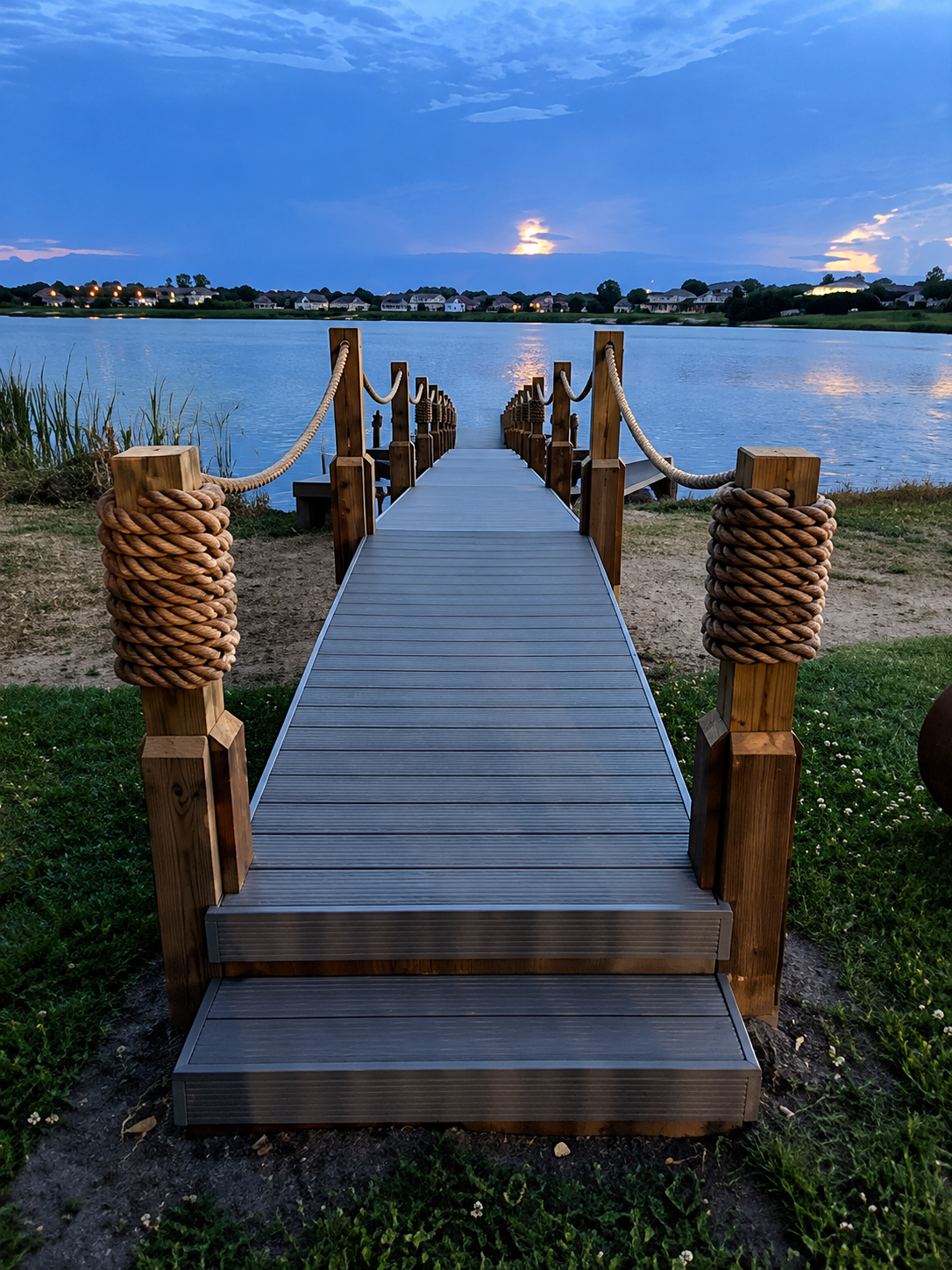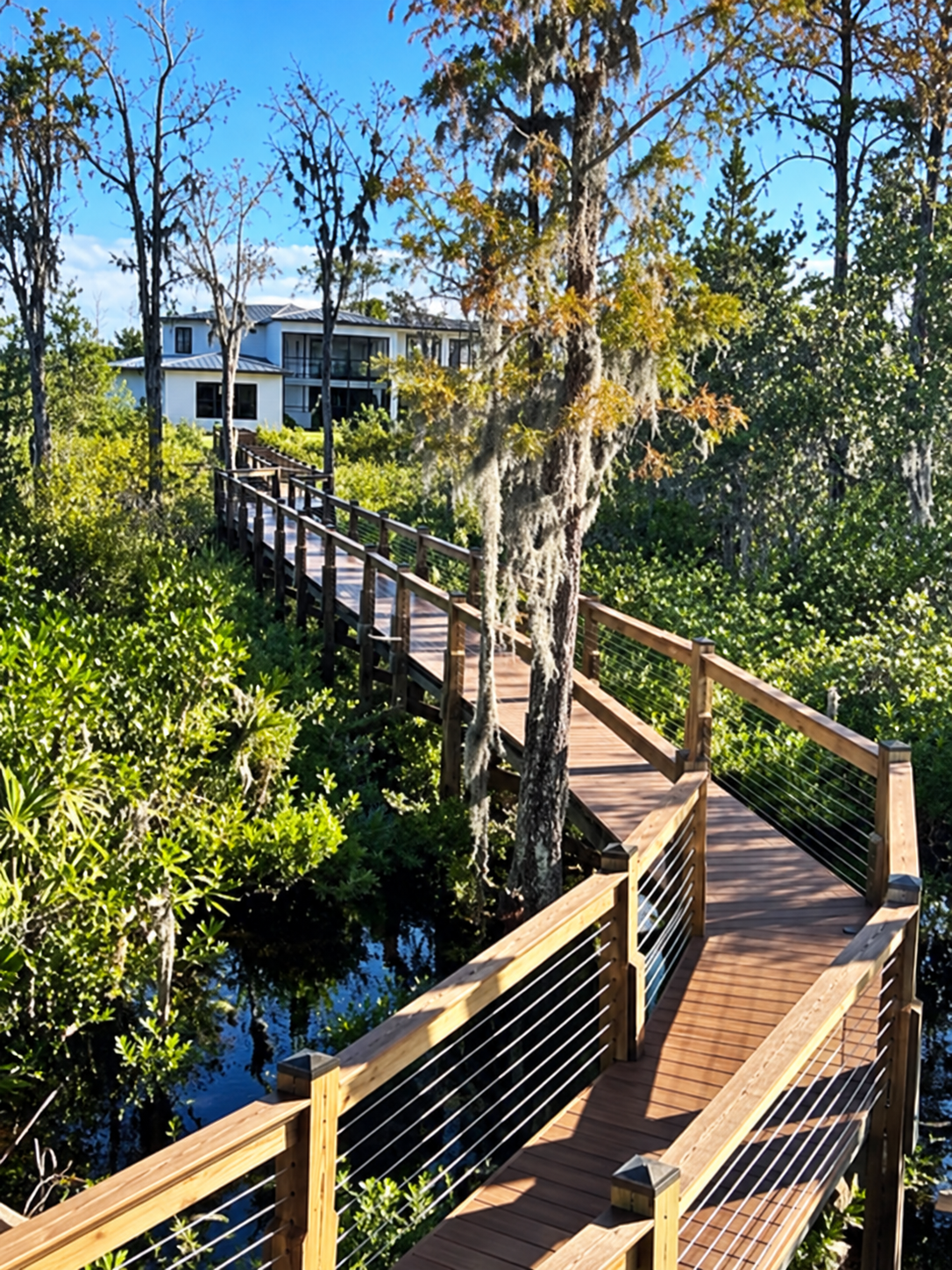
A commercial dock is a different project from a residential one, not because the water is different but because the use is different. A dock that serves a marina, a restaurant, a condo complex, or a public access point carries traffic, loads, and liability that a private dock does not, and the planning has to account for that. The commercial dock is the structure that serves the public and the business, and it is the one that the permitting and the engineering take most seriously.
The load is the first difference. A commercial dock carries more foot traffic than a residential one, and it may carry vehicles, equipment, or goods. The framing, the pilings, and the decking all have to be sized for the load the dock will see, not just the load a private dock would see. A dock built for light foot traffic is not the same as one built for a forklift or a delivery vehicle, and the sizing reflects the use. The load is the number that the structure depends on, and it is the one that the safety and the durability of the dock depend on.
The accessibility is the other difference, and it is the one that the public use requires. A commercial dock has to meet accessibility standards that a private dock does not, and the layout has to accommodate people with mobility challenges. The ramp, the width, the railing, and the surface all have to be chosen and installed to the standard the use demands. The accessibility is the part of the commercial project that is about the public, not just the structure, and it is the part that the code most directly addresses.
The permitting is the other difference, and it is the one that most affects the timeline and the cost. A commercial dock is held to a different standard than a residential one, and the permits, the inspections, and the engineering are more involved. A commercial project may require engineered plans, a higher level of review, and a longer permitting timeline. The permitting is part of the commercial project, and a builder who knows the waterway and the requirements can tell you what to expect.
The materials are the other consideration, and they are the ones that the durability and the maintenance depend on. A commercial dock takes more wear than a residential one, and the decking, the framing, and the hardware have to be chosen for the traffic and the exposure. A material that holds up under residential use may wear faster under commercial use, and the commercial project is the one that most benefits from materials chosen for the load. The materials are the choice that the life of the commercial dock depends on.
The layout is the other decision, and it is the one that the usability depends on. A commercial dock has to accommodate the traffic, the boarding, and the equipment that the business or the public will use. A walkway that is too narrow for the traffic is a bottleneck, and a boarding area that is in the wrong place interferes with the operation. The layout is the part of the commercial project that is about the use, not just the structure, and it is the one that the function of the dock depends on.
The timeline is the other consideration, and it is the one that the business needs to plan for. A commercial dock is a larger project than a residential one, and it takes longer, from the permitting to the construction. A business that depends on the dock for its operation has to plan the project around the timeline, and the timeline is a function of the scope, the season, and the permitting. The timeline is not a number that can be given without the assessment, and a builder who knows the waterway can give a realistic estimate after the scope is defined.
The commercial dock is the project that serves the business and the public, and it is the one that the waterfront economy sometimes depends on. A marina, a restaurant, a condo complex, or a public access point all rely on a dock that is built for the traffic and the use they see, and the commercial project is the one that delivers that. The commercial dock is the larger investment, and it is the one that the business and the public both benefit from.
The way to plan a commercial dock is to start with the use, the site, and the requirements, and to design the dock for the load and the traffic it will see. A builder who works on commercial waterfront projects in Central Florida can guide the planning, the permitting, and the construction, and the result is a dock that serves the business and the public for years. The commercial dock is the project that the waterfront economy sometimes requires, and the planning is what makes it work.
Ready to talk about your waterfront? We assess your shoreline, your watercraft, and how you use the water, then give you an honest, accurate estimate — no obligation.
Frequently Asked Questions
- How is a commercial dock different from a residential dock?
- A commercial dock carries more foot traffic and may carry vehicles or equipment, so the framing, pilings, and decking are sized for the heavier load. It also has to meet accessibility standards for public use and goes through a more involved permitting process. The materials and layout are chosen for durability and the specific use.
- Does a commercial dock need different permits?
- Often yes. A commercial dock is held to a different standard and may require engineered plans, a higher level of review, and a longer permitting timeline than a residential dock. A builder who knows the waterway and the requirements can tell you what to expect for your project.
- What materials are best for a commercial dock?
- A commercial dock takes more wear than a residential one, so the decking, framing, and hardware should be chosen for the traffic and exposure. A material that holds up under residential use may wear faster under commercial use. The commercial project most benefits from materials chosen for the specific load.
- How long does a commercial dock project take?
- It depends on the scope, the season, and the permitting. A commercial dock is a larger project and takes longer than a residential one. A business that depends on the dock should plan around the timeline, which a builder who knows the waterway can estimate after the scope is defined.
- Why does a commercial dock need to be accessible?
- A commercial dock serves the public, so it has to meet accessibility standards for people with mobility challenges. The ramp, the width, the railing, and the surface all have to be chosen and installed to the standard the use demands. Accessibility is the part of the project the code most directly addresses.