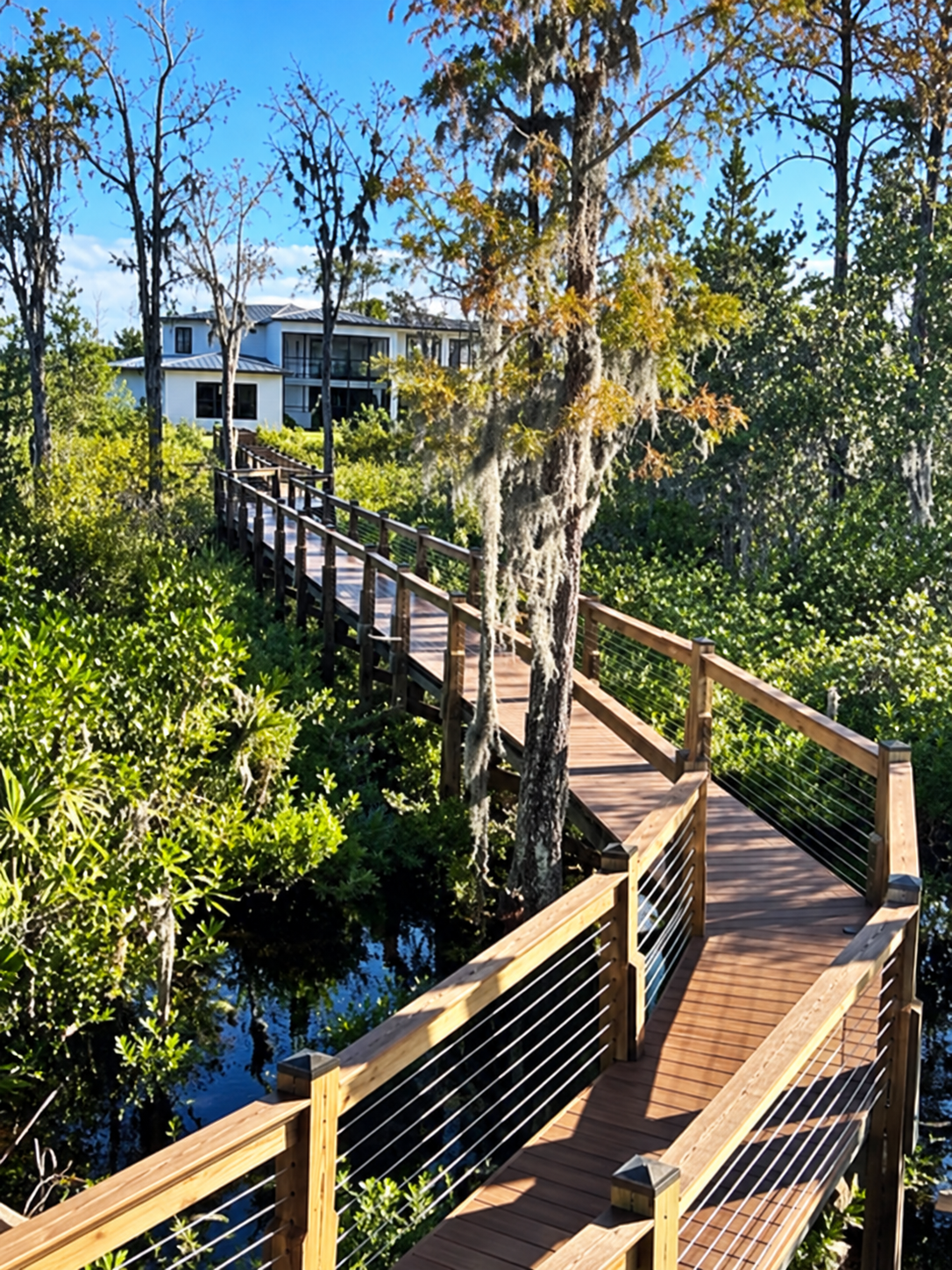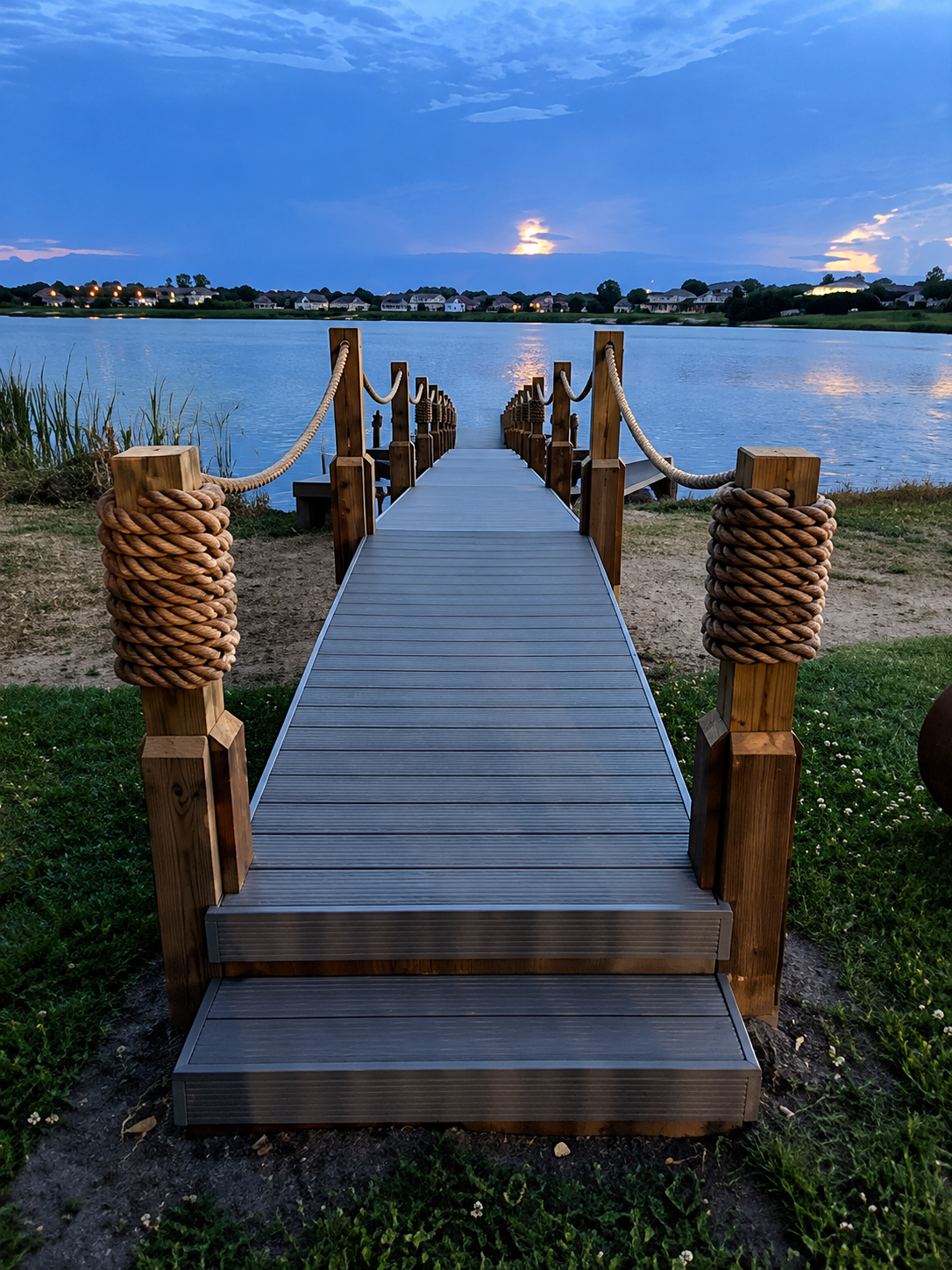
A commercial waterfront is not just a dock, it is a system of access, and the walkways, the ramps, and the boarding floats are the parts that connect the shore to the water. A dock that serves the public or a business has to get people and goods from the land to the boats, and the walkways, the ramps, and the floats are the structures that do that. The access system is what makes a commercial waterfront usable, not just the dock itself.
The walkway is the path from the shore to the dock, and it is the part that carries the foot traffic. A commercial walkway has to be wide enough for the traffic it will see, and it has to be stable and non-slip for the people who use it. A walkway that is too narrow becomes a bottleneck, and a walkway that is slippery when wet is a liability. The walkway is the part of the access system that most directly serves the people, and it is the one that the safety and the flow of the waterfront depend on.
The ramp is the part that bridges the grade, and it is the one that accommodates the change in elevation from the shore to the dock. A commercial dock on a shoreline with a seawall or a grade change needs a ramp to get from the land to the dock, and the ramp has to meet the grade and the accessibility standards. A ramp that is too steep is a hazard, and a ramp that does not meet the standard is a code issue. The ramp is the part of the access system that most directly addresses the elevation, and it is the one that the accessibility and the safety depend on.
The boarding float is the part that sits on the water and moves with it, and it is the one that the boats tie up to and the people board from. A boarding float is connected to the dock by a ramp or a hinge, and it floats with the water level, which keeps the boarding at a consistent level relative to the boat. The float is the part of the access system that most directly serves the boats, and it is the one that the docking and the boarding depend on.
The connections between the walkway, the ramp, and the float are the details that make the system work, and they are the ones that the stability and the safety depend on. A walkway that connects to a ramp that connects to a float has to have the right hardware to handle the movement and the load. The hinges, the brackets, and the fasteners are the parts that most directly carry the stress, and they are the parts that the durability of the system depends on.
The materials are the other consideration, and they are the ones that the maintenance and the life of the access system depend on. A walkway, a ramp, and a float that are built for commercial use have to handle the traffic, the weather, and the water, and the materials have to be chosen for all three. A material that is adequate for a private dock may not hold up under the commercial use, and the access system is the part of the waterfront that most needs the right materials.
The layout is the other decision, and it is the one that the usability depends on. A walkway that flows from the shore to the dock without bottlenecks is a walkway that serves the public, and a boarding float that is placed where the boats can reach it is a float that serves the boats. The layout is the part of the access system that is about the use, not just the structure, and it is the one that the function of the waterfront depends on.
The access system is the part of a commercial waterfront that makes it work, and it is the one that the public and the business rely on. A dock without a walkway, a ramp, or a boarding float is a dock that is hard to reach and hard to use, and a dock with a well-designed access system is a dock that serves its purpose. The access system is the infrastructure that the commercial waterfront depends on, and it is the part that the usability and the safety of the waterfront depend on.
The way to plan the access system is to start with the use, the site, and the requirements, and to design the walkway, the ramp, and the float for the traffic and the boats they will serve. A builder who works on commercial waterfront projects in Central Florida can guide the design, the permitting, and the construction, and the result is an access system that works for the public and the business. The access system is the part that makes the commercial waterfront usable, and the planning is what makes it work.
Ready to talk about your waterfront? We assess your shoreline, your watercraft, and how you use the water, then give you an honest, accurate estimate — no obligation.
Frequently Asked Questions
- What is the difference between a walkway and a boarding float?
- A walkway is the fixed path from the shore to the dock, carrying foot traffic. A boarding float sits on the water, moves with the water level, and is where boats tie up and people board. The walkway serves the people; the float serves the boats. Both are part of the access system that makes a commercial waterfront usable.
- When does a commercial dock need a ramp?
- A ramp is needed where the grade changes from the shore to the dock, such as at a seawall or a slope. It has to meet the grade and the accessibility standards, because a ramp that is too steep is a hazard and one that does not meet code is a compliance issue.
- What materials should a commercial boarding float use?
- A commercial boarding float has to handle traffic, weather, and water, so the materials should be chosen for all three. A material adequate for a private dock may not hold up under commercial use. The access system most needs the right materials for its intended load and exposure.
- How do the walkway, ramp, and float connect?
- They connect with hardware, hinges, brackets, and fasteners designed to handle the movement and load. Those connections carry the stress and are the parts the durability of the system depends on. A well-connected access system is stable and safe; a poorly connected one is a liability.
- Why is the access system important on a commercial waterfront?
- The access system, the walkways, ramps, and boarding floats, is what makes a commercial dock usable for the public and the business. A dock without it is hard to reach and use; with it, the dock serves its purpose. The access system is the infrastructure the commercial waterfront depends on.