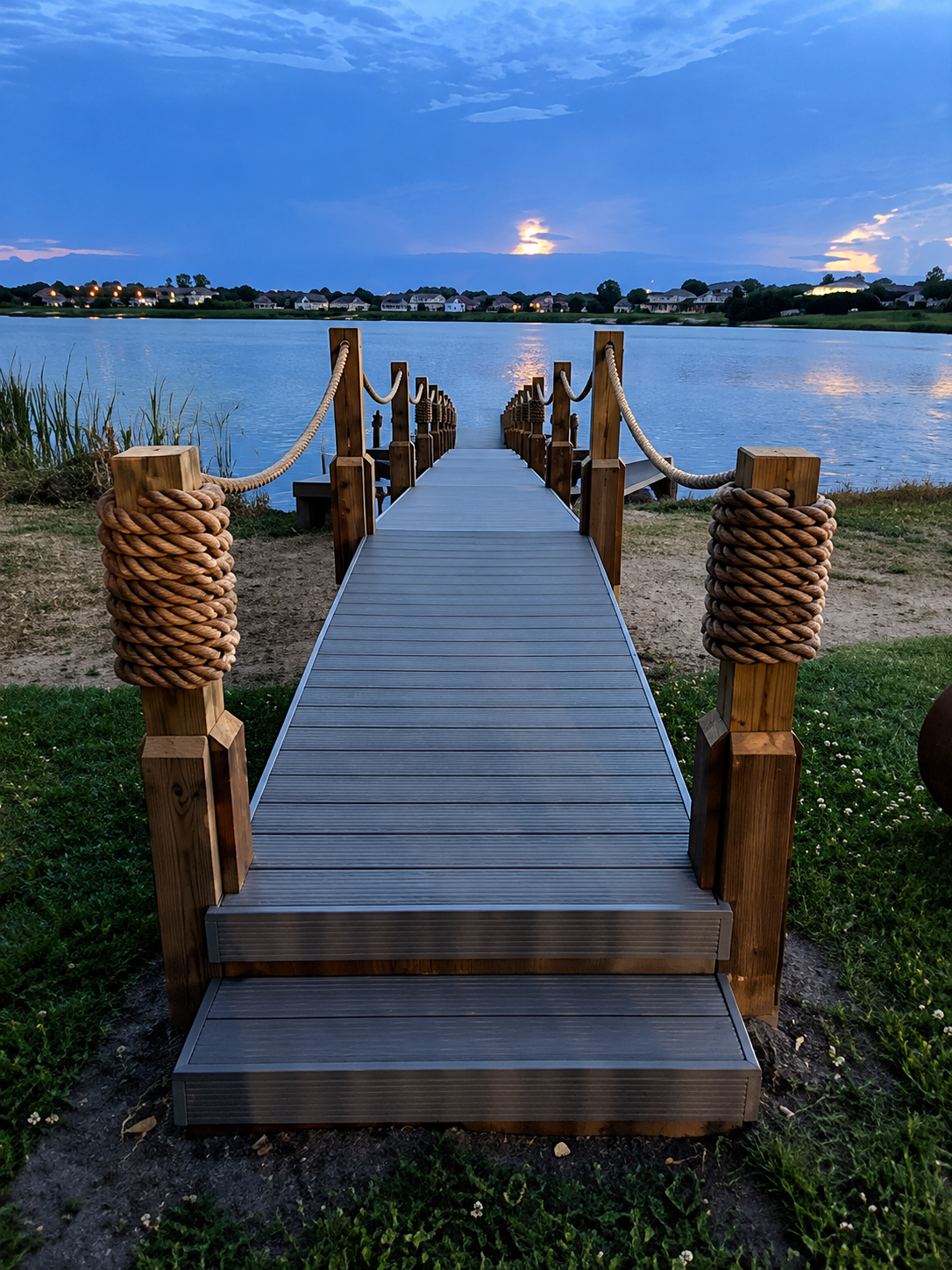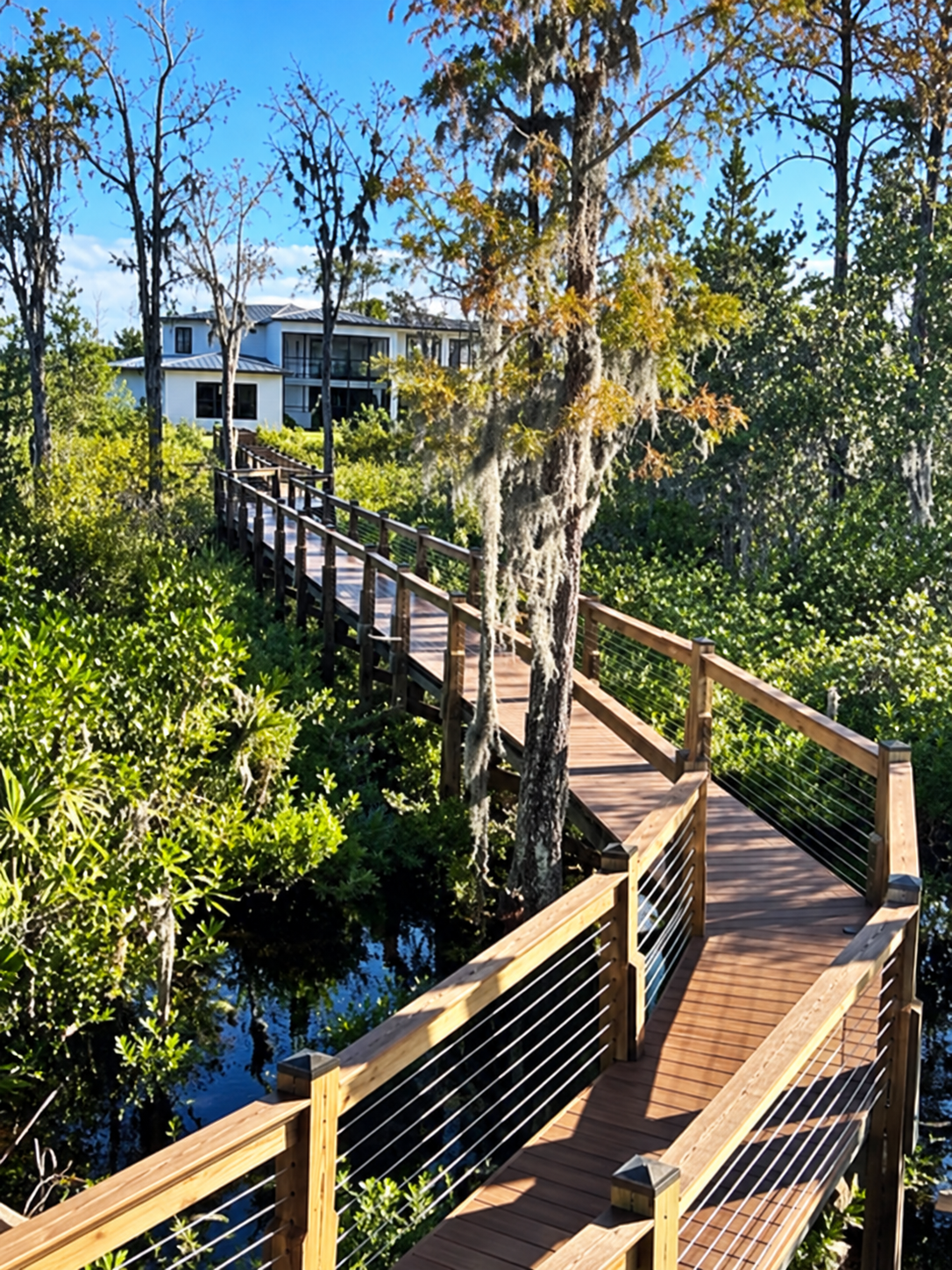
A commercial dock takes more wear than a residential one, and the materials are the choice that most determines how long the dock lasts and how much upkeep it needs. A dock built for a marina, a restaurant, or a public access point sees traffic and weather that a private dock does not, and the decking, the framing, and the hardware have to be chosen for that load. The materials are the decision that the life of a commercial dock depends on, and it is the one that the maintenance budget follows from.
The decking is the surface that takes the most direct wear, and it is the part that most needs to be chosen for the traffic. A commercial dock with light foot traffic can use a residential-grade decking, but a dock with heavy traffic or vehicles needs a commercial-grade material that resists the wear. The decking has to handle the sun, the water, and the foot or the vehicle load, and the material is the choice that the surface life depends on. A material that is adequate for a backyard deck will not hold up under a commercial dock, and the material is the decision that most directly affects the replacement schedule.
The framing is the structure that carries the decking, and it is the part that has to handle the load the dock will see. A commercial dock built for a seating area or a boat lift needs heavier framing than a residential dock, and the framing has to be sized for the live load and the dead load the dock will carry. The framing is the choice that the structural life depends on, and it is the one that the safety and the durability most directly depend on.
The hardware is the other structural element, and it is the part that most often needs replacement. The bolts, the brackets, and the fasteners that hold the frame to the pilings are the parts that corrode and loosen under the commercial exposure, and the hardware has to be chosen for the corrosion resistance the environment demands. A commercial dock with light-duty hardware will need replacement sooner than one with heavy-duty, corrosion-resistant hardware, and the hardware is the choice that the maintenance schedule depends on.
The pilings are the foundation, and they are the part that most determines the life of the dock. A commercial dock may need deeper or larger pilings than a residential one, depending on the load and the bottom conditions, and the pilings have to be driven for the use the dock will see. The pilings are the choice that the foundation life depends on, and they are the part that the storm performance of the dock depends on.
The maintenance is the other consideration, and it is the one that the budget most directly feels. A commercial dock with materials chosen for the traffic and the exposure needs less maintenance and less replacement than one with residential-grade materials, and the maintenance is the ongoing cost that the material choice drives. A commercial dock is a long-term investment, and the materials are the choice that the long-term cost depends on.
The durability is the other side of the maintenance, and it is the one that the downtime depends on. A commercial dock that is down for repairs is a dock that is not earning or not serving, and the durability of the materials is what keeps the dock in service. A dock that is built for the traffic and the weather stays in service longer and costs less over its life than one that is not, and the durability is the value that the material choice delivers.
The way to choose the materials is to start with the use, the traffic, and the exposure, and to match the decking, the framing, and the hardware to the load the dock will see. A builder who works on commercial waterfront projects in Central Florida can help you choose the materials that fit the use and the budget, and the result is a dock that lasts and that costs less to maintain. The materials are the decision that the life and the cost of the commercial dock depend on, and they are the choice that the performance of the dock follows from.
A commercial dock is a larger investment than a residential one, and the materials are the decision that determines whether that investment pays off over the years or costs more in the long run. The right materials, chosen for the traffic and the exposure, make the dock a durable, low-maintenance asset. The wrong materials, chosen for the first cost, make the dock a recurring maintenance expense. The choice is the one that the waterfront business or the public access depends on, and it is the one that should be made with the long term in mind.
Ready to talk about your waterfront? We assess your shoreline, your watercraft, and how you use the water, then give you an honest, accurate estimate — no obligation.
Frequently Asked Questions
- What decking is best for a high-traffic commercial dock?
- A high-traffic commercial dock needs a commercial-grade decking that resists wear from foot traffic and vehicles. A material adequate for a residential deck will not hold up under commercial use. The decking should be chosen for the sun, water, and load the dock will see, which most directly affects the replacement schedule.
- Does a commercial dock need heavier framing?
- Often yes. A commercial dock built for a seating area or a boat lift needs framing sized for the live and dead load it will carry. Framing that is adequate for a residential dock may not handle commercial traffic. The framing is the choice the structural life and the safety of the dock depend on.
- What hardware should a commercial dock use?
- Commercial docks should use heavy-duty, corrosion-resistant hardware, bolts, brackets, and fasteners. Light-duty hardware corrodes and loosens faster under commercial exposure and drives the maintenance schedule. The hardware is the choice the ongoing maintenance cost depends on.
- How does material choice affect commercial dock maintenance?
- Materials chosen for the traffic and exposure need less maintenance and less replacement than residential-grade materials. A commercial dock is a long-term investment, and the materials are the choice that the long-term cost depends on. Durable materials keep the dock in service longer and cost less over its life.
- Should I choose commercial dock materials for first cost or durability?
- For a commercial dock, durability usually wins. Materials chosen for first cost often lead to higher maintenance and replacement costs over time. The right materials make the dock a durable, low-maintenance asset; the wrong ones make it a recurring expense. The choice should be made with the long term in mind.